Wearing smart glasses over your eyeglasses: the honest fit guide
Yes, it's possible — sometimes comfortably, usually temporarily, and occasionally it's the only option that works. Here's which models fit over eyeglasses, when the stack makes sense, and why inserts win for daily use.
The verdict
Stack for the evaluation window. Wear the stack for the first week to decide whether you'd actually keep the smart glasses day-to-day. If you'd keep them, then order inserts. Never order custom lenses for a pair of display glasses you haven't already verified you want to own. Inserts solve the stack problem permanently; buying them prematurely guarantees wasted money if you send the hardware back.
01The physics of the stack
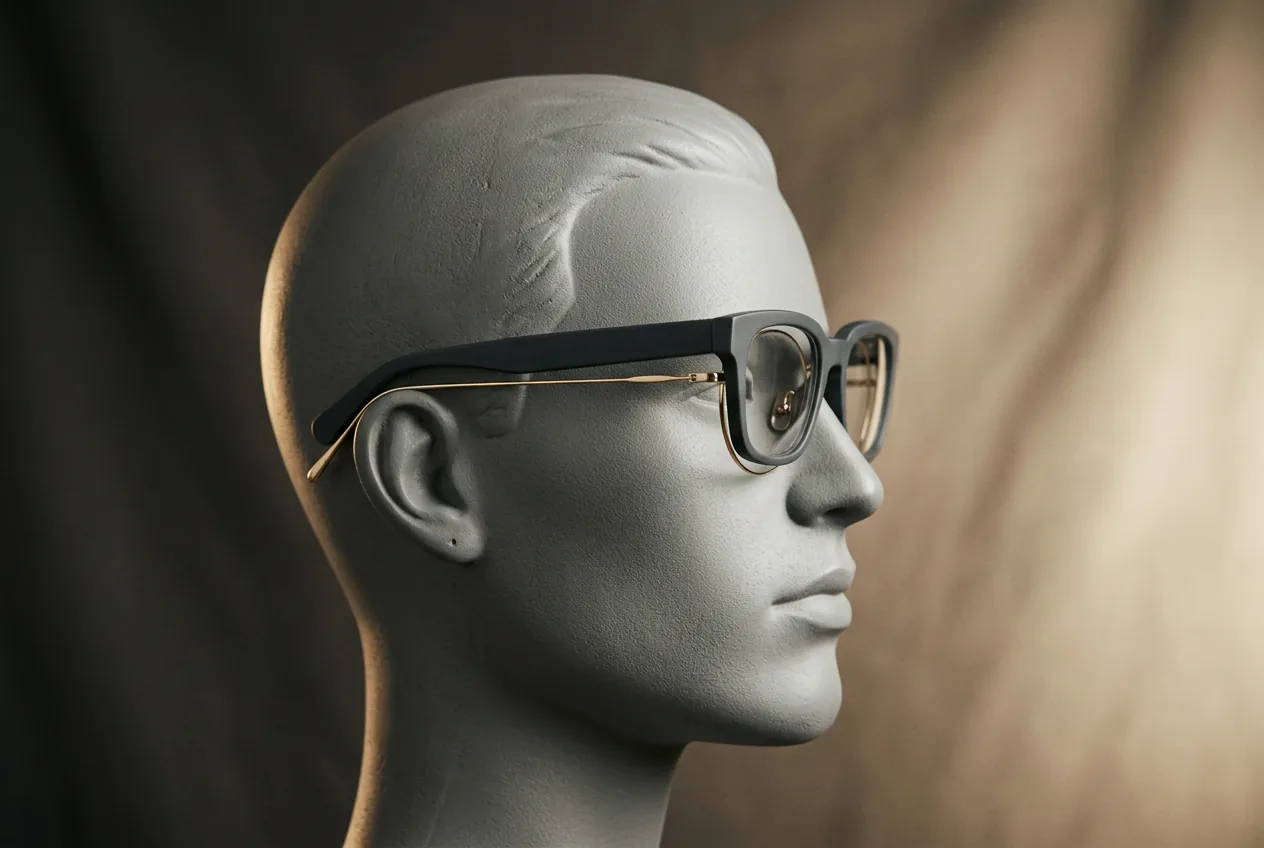
Two variables decide everything. Eye relief: display glasses position their optics a fixed distance from your face; your eyeglasses occupy roughly typically 10–20 mm, varying by frame of that space. Low-profile frames (rimless, thin wire, flat lenses) often fit; deep frames, thick high-index lenses, and progressive corridors usually collide with the optics or push the glasses so far forward that the fit collapses. Nose real estate: two nose bridges stacked means double the pressure on a smaller contact area — the weight of the display glasses (63–88 g, per product specifications) rests entirely on your eyeglass bridge, which was never engineered for it.
The optical consequence of a successful stack: your eyeglasses correct your vision exactly as they do in daily life, and the display optics do the rest. The optical consequence of a marginal stack: reflections between the eyeglass back-surface and the display optics (ghosting), frame edges intruding at the periphery, and pressure points that make hour-two unpleasant. OWNER REPORTS
02Model-by-model fit reports
Manufacturers officially point to inserts, but owner reports paint a detailed picture of physical clearance. Here is the practical reality of the stack across the current ecosystem:
- XREAL One / 1S: The easiest entry point. Adjustable bridge and generous eye relief fit slim eyeglass frames comfortably; widely community-endorsed for initial testing.
- XREAL One Pro: Similar optics, though the wider FOV module sits slightly deeper — tighter but workable with low-profile frames.
- VITURE Beast / Pro 2: VITURE frames run narrower; stacking works best with thin frames. Buyers who are purely nearsighted should note that Pro 2 built-in dials reduce the need to stack entirely.
- RayNeo Air series: Mixed results. Average eye relief and budget-friendly pricing make it a fine experiment if you already own a compatible pair of glasses.
- Rokid Max 2: Built-in dials cover myopia well, making the stack rarely necessary for nearsighted users.
- HUD glasses (Even G2): Designed as actual eyewear — order with your Rx ground directly into them rather than attempting to stack.
OWNER REPORTS The pattern to notice: models with dials need the stack least, and models with big eye relief do it best.
03Failure modes
Three failure modes to expect beyond simple tightness. The slide: the display glasses' bridge sits on a curved eyeglass bridge — head movement (especially looking down at a Steam Deck) gradually walks the stack out of alignment, and the sharp center drifts. The pinch: doubled weight concentrates on the same square centimeters of nose — users report the marks and discomfort more than any optical issue. The IPD shift: pushing display glasses forward to clear your frames moves your eyes off their optical axis — introducing exactly the IPD-mismatch blur the glasses would otherwise avoid.

Is wearing glasses under display glasses bad for the optics or my eyes? It won't damage anything, but it degrades the experience noticeably: two extra lens surfaces add reflections, the eyeglass frame edge can intrude into the virtual view, and the doubled weight on your nose shortens comfortable session time. If you find yourself stacking glasses daily, that's the signal to order inserts or wear contacts.