Prescription & vision: seeing clearly through smart glasses
Many buyers wear corrective lenses, yet most reviews spend one sentence on vision. This cluster is the fix: every path to clear vision, by product and by eye.
Updated Aug 25, 2026
The most expensive mistake in smart glasses isn't buying the wrong brand — it's buying a pair your eyes can't actually use. A -4.00 diopter nearsighted buyer who skips vision correction gets a beautiful 1080p panel they physically cannot focus on. An astigmat who trusts a diopter dial gets smearing that no return window fixes. An IPD mismatch produces edge blur that looks like a defective unit. The vision layer matters more than any spec-sheet line, and this hub is where we take it seriously.

Prescription inserts
the default pathA magnetic or clip-in frame with lenses ground to your full Rx — sphere, cylinder, axis. Works for astigmatism. $50–150 + lenses.
Diopter dials
myopia onlyA physical dial per eye adjusts focus for nearsightedness (−2 to −6 D depending on model). No astigmatism or hyperopia correction.
Glasses underneath
the zero-cost hackSome frames fit over eyeglasses. Works for quick tests; comfort and fit vary wildly. Nose-bridge height is the limiter.
Contacts
the hidden favoriteContact lenses correct everything the dials can't. The unglamorous answer that solves 90% of vision issues in display glasses.
The guides
THE DEFAULT PATH
Prescription inserts: the complete guide
How inserts work, what they cost for every major brand, and how to order them with the right prescription details.
ReadTHE TRAP
Astigmatism and smart glasses
Why diopter dials can't correct cylinder, and the three solutions that actually work.
ReadTHE HIDDEN SPEC
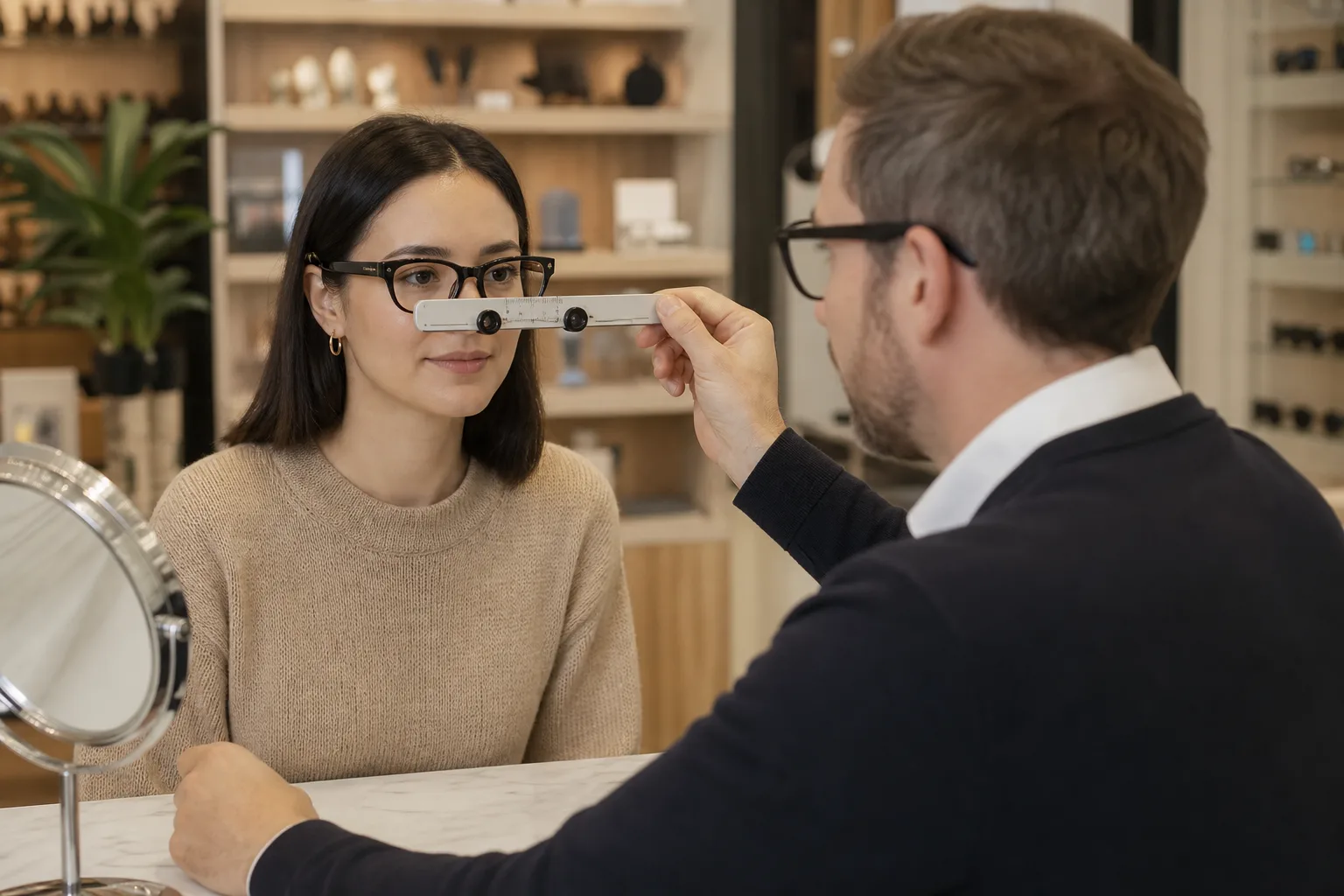
IPD, explained: the blur you can't diagnose
Interpupillary distance decides edge-to-edge sharpness. How to measure it and match it to glasses.
ReadBUILT-IN CORRECTION
Diopter adjustment dials
Which models have focus dials, their ranges (-5.00 to -6.00 D), and the astigmatism asterisk.
ReadTHE ZERO-COST HACK
Wearing glasses underneath smart glasses
Which frames fit over eyeglasses, when it works, and why inserts beat the stack for everything beyond testing.
ReadMULTIFOCAL
Progressive & bifocal wearers
Which insert programs support multifocal lenses — and why the virtual-distance optics may spare your add power.
ReadRELATED
Eye strain, safety, and comfort
The research on smart glasses and eye fatigue — and what actually causes headaches (spoiler: fit and IPD).
ReadVision correction by category
The five smart-glasses categories solve vision differently, and knowing the pattern saves research time. Display glasses (XREAL, VITURE, RayNeo, Rokid Max) use inserts and — on some models — diopter dials; the XREAL One Pro notably ships in two IPD sizes. AI camera glasses (Ray-Ban Meta, Oakley) are real eyeglass frames — your optician grinds standard prescription lenses into them. HUD glasses have the deepest prescription support: Even Realities handles −12 to +12 diopters including astigmatism through its own lens service. Hybrids mostly follow the insert pattern. Start from your category (the Finder settles that), then come back here for the vision layer.