Display technology, decoded: micro-OLED, waveguides, and the nits mess
Every display in smart glasses comes from one of two optical families and one of three panel types. Learn the six combinations and you can read any spec sheet in this market.
On this page
Display glasses sound like magic until you learn the trick, at which point they become engineering — impressive, constrained, and completely comparable across brands. Two optical families and three panel types cover essentially every product on the market in 2026. Master those, plus the industry's two dirtiest metrics (nits and inches), and spec sheets stop being intimidating.
01Two optical families: birdbath and waveguide
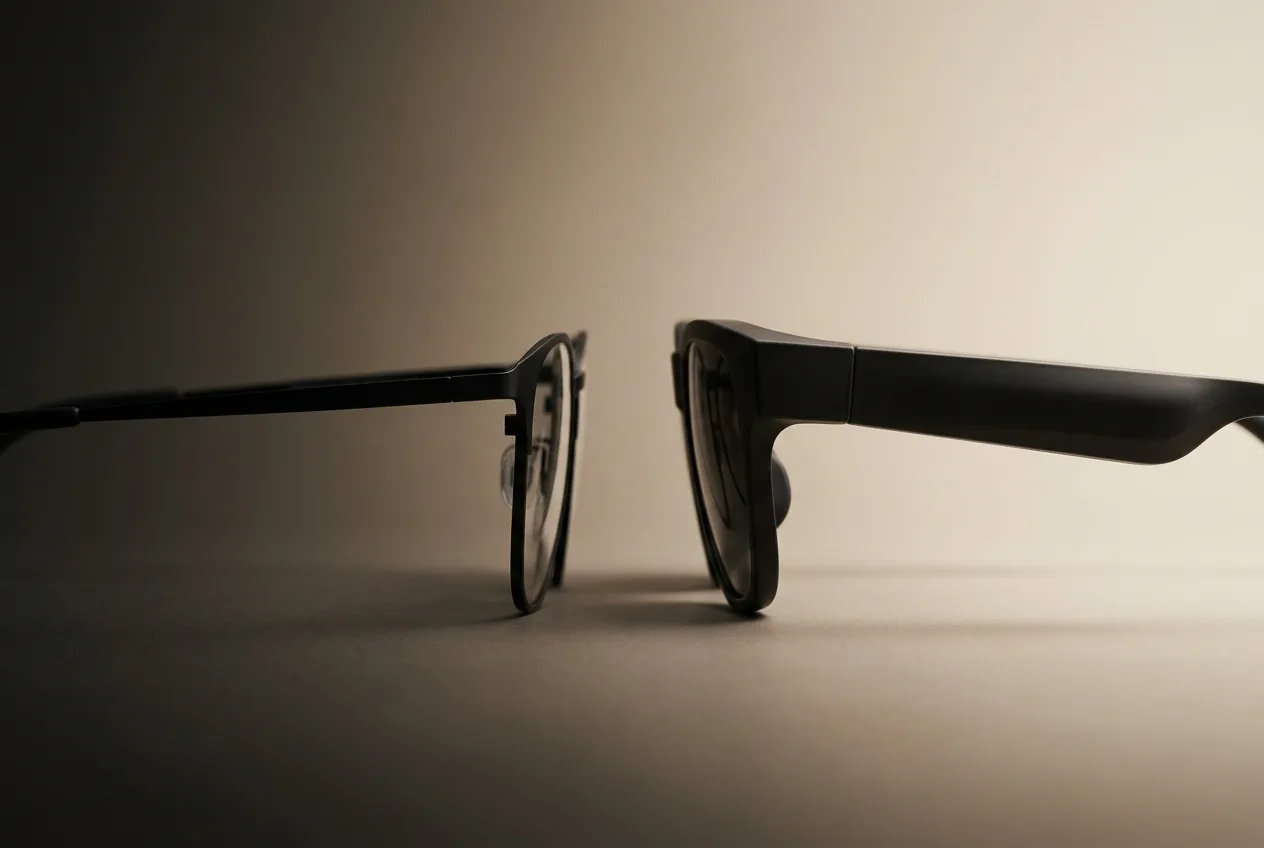
Birdbath optics — the magnifying-glass approach. A micro-OLED panel sits above your eye; a semi-transparent mirror splits incoming light so you see the panel superimposed on the world, magnified. This is how every tethered display pair works (XREAL One series, VITURE Beast and Pro 2, RayNeo Air series, Rokid Max 2). The physics is mature, cheap, and delivers full 1080p–1200p resolution per eye at 46–58° FOV. The cost: the optical stack is physically thick, so birdbath glasses are 63–88 g with visible “goggle” depth, and they dim your view of the real world (electrochromic dimming in VITURE's 2026 line makes that dimming adjustable, a genuinely nice upgrade).
Waveguides — the light-guiding approach. A tiny projector beams light into a transparent lens with microscopic structures that guide it to your eye. The lens stays glasses-thin, which is how waveguide products hit 36–52 g and look like actual eyewear: Even G2, Rokid Glasses, RayNeo X3 Pro, Meta Ray-Ban Display, and the coming Android XR eyewear. The trade is resolution and efficiency — today's affordable full-color consumer waveguides top out around 640×480 (X3 Pro) or small monocular squares (Ray-Ban Display's 600×600), and much of the projected light is lost inside the lens, which is why waveguide products chase brightness so desperately.
The categories fall out of this split almost perfectly: tethered display glasses = birdbath (big, bright-enough, sharp images; thick frames), HUD and hybrid glasses = waveguide (thin, light, all-day; small or coarse images). When Android XR eyewear arrives in fall 2026, expect it to arrive on waveguides — thinness is the price of admission for all-day glasses.
02Three panel types: micro-OLED, micro-LED, and LCD-class
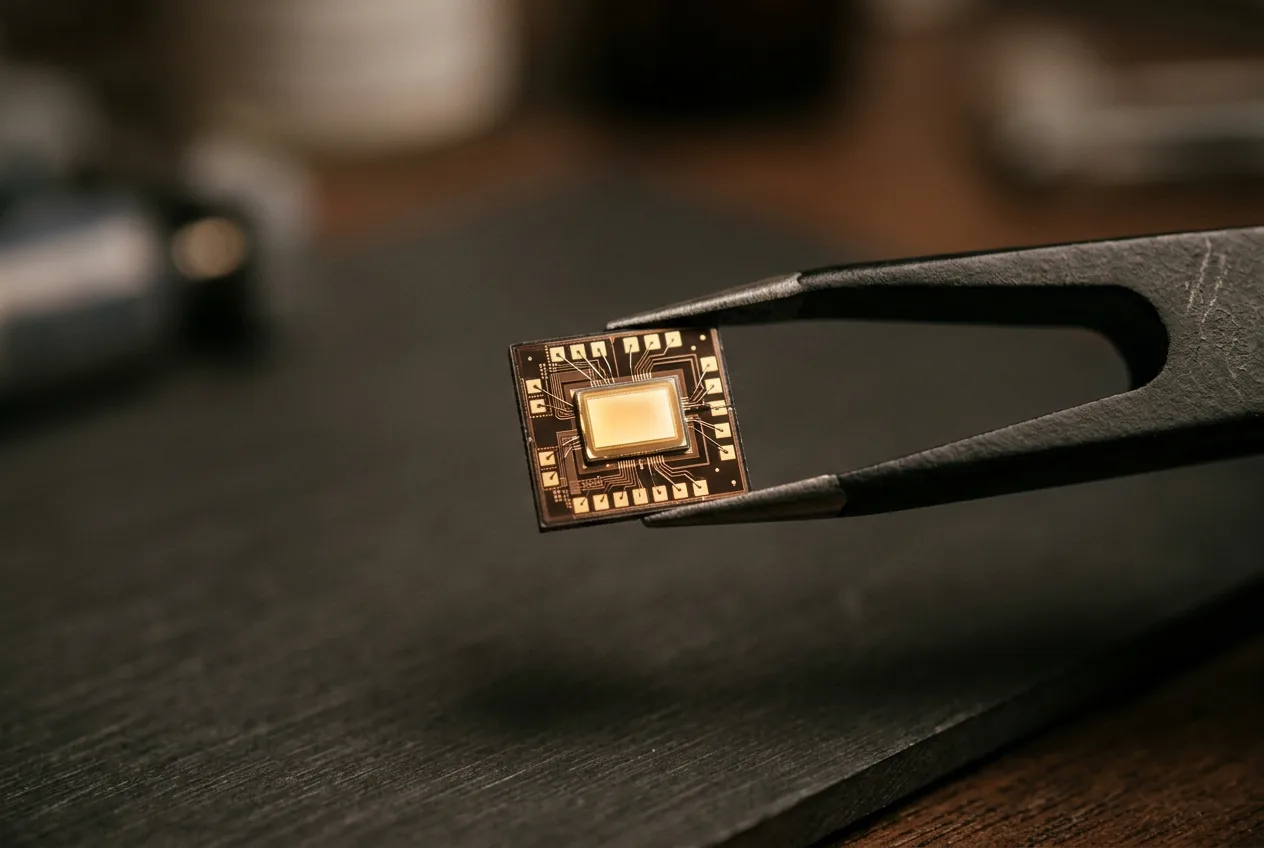
- Micro-OLED (OLED-on-silicon) builds OLED pixels directly onto a chip — tiny panels (0.55–0.68 inch) with 1920×1080 or 1920×1200 resolution, true blacks, excellent color. Sony dominates supply, which is why “Sony micro-OLED panel” appears in most flagship spec sheets. Brightness is the weak axis: roughly 500–1,250 nits to eye in current products. MFR SPEC
- Micro-LED swaps emissive inorganic LEDs in — massively brighter (3,500–6,000 nits in the RayNeo X3 Pro; 5,000 nits in Meta's Ray-Ban Display), efficient, and long-lasting, but manufacturing full-color arrays at high density is brutally hard. Current consumer results: small monochrome-green HUDs (Even G2, Memomind One), small full-color squares (Meta), or coarse full-color fields (X3 Pro's 640×480). This is the panel of the future; the future just isn't evenly distributed yet.
- LCD-class and LCOS persist in budget products — brighter than OLED's worst case but with washed-out blacks. If a pair under $200 doesn't say micro-OLED, this is likely what's inside, and it's the main reason cheap display glasses disappoint.
A 2026 wrinkle worth knowing: tandem micro-OLED stacks two OLED layers for roughly double the brightness. It powers the RayNeo Air 4 Pro's HDR10 certification and 1,200-nit output at $299 — the year's clearest example of flagship display tech trickling into budget price brackets. REVIEWS
03The nits problem: why brightness numbers can't be compared
A nit is a candela per square meter — a real physical unit with a real measurement method, which is exactly why the industry found three ways to abuse it. Brands quote panel brightness (before optics eat 80% of it), to-eye brightness (after optics), and perceived brightness (a computed figure boosted by contrast and dimming behavior). VITURE's Luma Ultra marketing leans on multi-thousand-nit perceived numbers while its Beast flagship's 1,250 nits is closer to a to-eye measurement; Meta quotes 5,000 nits for a micro-LED waveguide where the same number would mean something else entirely.
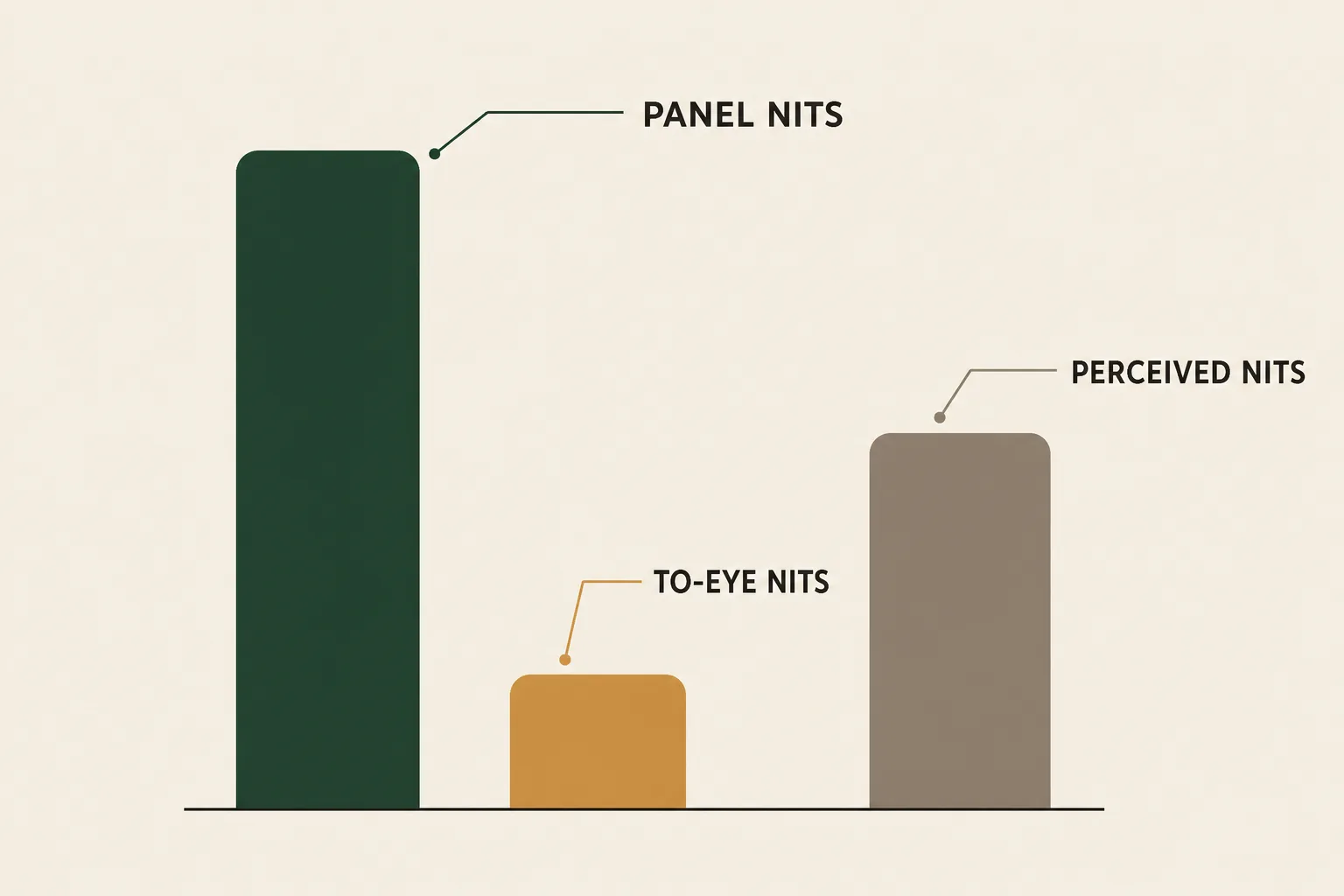
Our house rules: within one brand's lineup, nit comparisons are reliable (Beast at 1,250 genuinely outshines Pro 2's daylight-friendly panel); across brands, treat nits as directional — “usable outdoors” starts around 1,000 to-eye nits for birdbath glasses, and micro-LED waveguides are the only technology that's comfortably sunlight-readable today. If a spec sheet doesn't say which measurement its nits are, assume it's the flattering one. OUR ANALYSIS
Our pick
XREAL One
$399approx.
The safe default: sharp 50° display with spatial smarts built into the glasses.
Check price on AmazonRetailer links may earn us a commission — price approx., check retailer.
04Refresh rate, honestly
120 Hz is table stakes in 2026 display glasses, and it matters most for handheld gaming — the Steam Deck and Switch 2 (via a powered hub) genuinely output 1080p120, and the XREAL 1S advertises 3 ms latency to close the loop. For movies, refresh rate is mostly irrelevant (you're watching 24 fps content), and for desktop work 60 Hz is fine. Don't pay extra for 120 Hz you can't feed: console sources via HDMI adapters cap at 60 Hz, and most phones mirror at 60 Hz. MFR SPEC
05Reading a spec sheet with all of this
The complete triage for any display-glasses spec sheet: (1) panel type — micro-OLED or better, walk past LCD-class; (2) resolution per eye — 1080p minimum for text, 1200p noticeably sharper; (3) FOV — 46° budget, 50° standard, 57–58° flagship; (4) brightness in to-eye nits if stated — 1,000+ for daylight use; (5) weight — under 80 g for long sessions; (6) refresh — 120 Hz only matters for handheld gaming. Then cross off anything that doesn't match your source devices, because the best panel in the world can't fix a black screen.
Our pick #2
VITURE Pro 2
$299approx.
The 2026 budget king: 63 g, diopter dials, 120 Hz — $299.
Check price on AmazonRetailer links may earn us a commission — price approx., check retailer.
Frequently asked questions
What's better: micro-OLED or micro-LED?
Why do brightness claims vary so wildly between brands?
Do I need HDR10 in display glasses?
Our pick #2
VITURE Pro 2
$299approx.
The 2026 budget king: 63 g, diopter dials, 120 Hz — $299.
Check price on AmazonRetailer links may earn us a commission — price approx., check retailer.