Smart Glasses Battery Life: Claims vs Reality
The most misleading spec in smart glasses isn’t a lie — it’s a category error. Some of these products have no battery at all, some count their charging case, and the ones that drain your phone never mention it. Here is what each claim means, sourced.
On this page
Ask “how’s the battery?” about smart glasses and you get answers from three different physics. The tethered display pair has none — it borrows yours. The AI camera pair quotes hours that assume a definition of moderate you would not recognize. And the standalone pair markets “all day” with no number at all. This guide lines up every claim with what’s actually being counted, who measured it, and what it costs the rest of your bag.
The 30-second answer
Match the battery question to the category. Tethered display glasses: no battery — plan around your source device, and expect its runtime to roughly halve while driving glasses (manufacturer’s own numbers). AI camera glasses: the headline is per-charge under moderate use — Ray-Ban Meta Gen 2’s official 8 h lands nearer 4 under heavy use — while the charging case adds days of reserve. Standalone smart glasses: claims like “all-day” or “16+ hours” are manufacturer figures with no standardized test behind them; read them as positioning, then check owner reports.
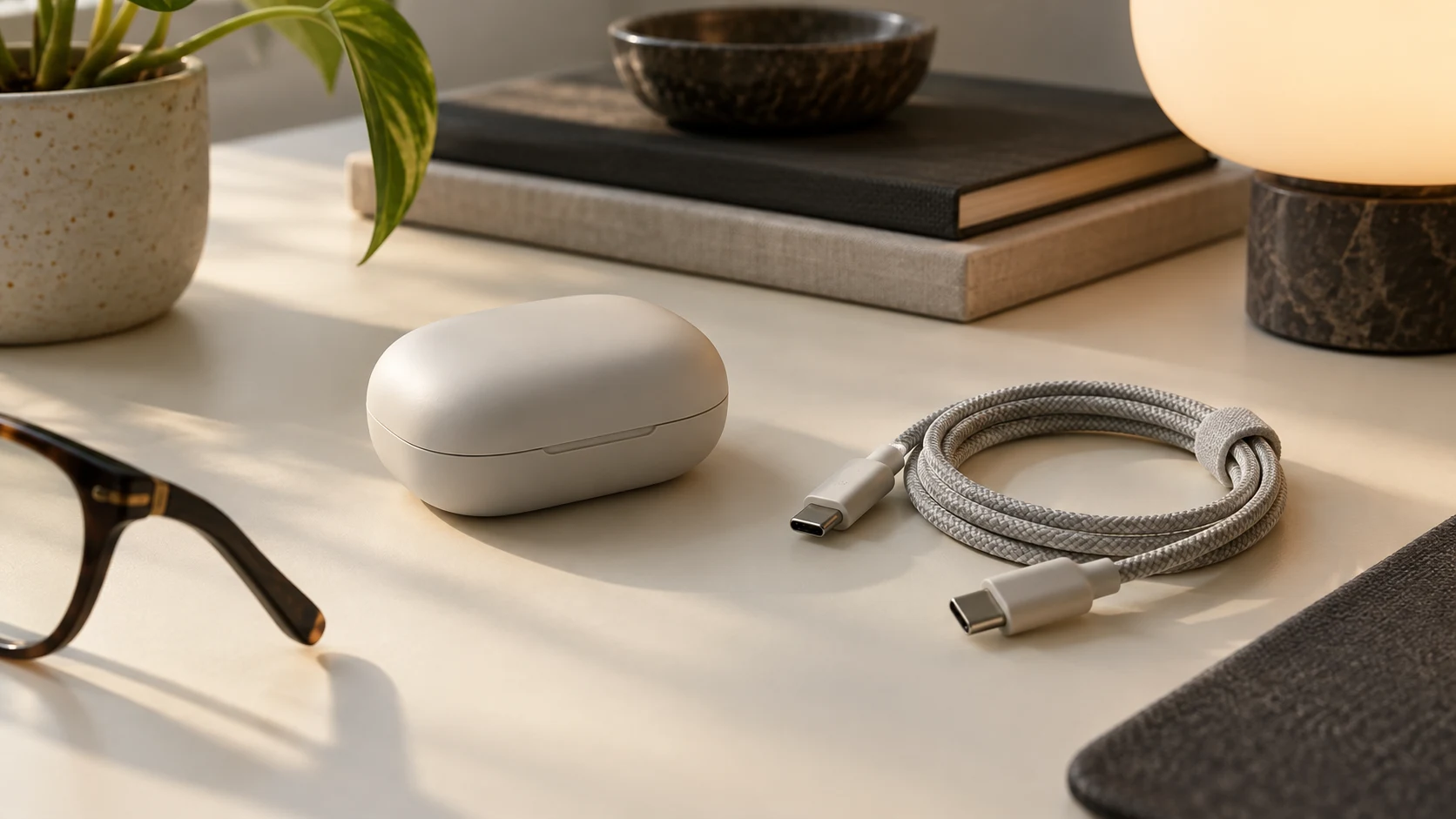
0 mAh
Battery in tethered glasses
the host device pays
≈½
Source runtime under glasses load
Beam Pro 7 h → 3 h, official
8 h / 48 h
Gen 2 official figures
moderate use / case reserve
20 min → 50%
Gen 2 fast charge
official
01Battery Is a Category Question First
The five product categories described in our types-of-smart-glasses guide have three different battery stories. Tethered display glasses are peripherals — powered monitors with no cells. Camera-and-assistant glasses are battery devices with cases that double as chargers. Standalone smart glasses (the Android XR class, HUD tier) carry their own compute and their own endurance math. Comparing a quoted number across categories — “8 hours” against “all day” against a monitor with no battery — is the root error in most battery disappointment. OUR ANALYSIS
02Tethered Glasses: Your Phone Pays the Bill
The XREAL One, One Pro, and 1S, VITURE’s Beast and Pro 2, RayNeo’s Air line, and Rokid’s Max 2 carry no internal battery — power arrives over the same USB-C cable that carries the video. The spec that matters is not on the glasses page at all: it is your source device’s runtime under display load. MFR SPEC
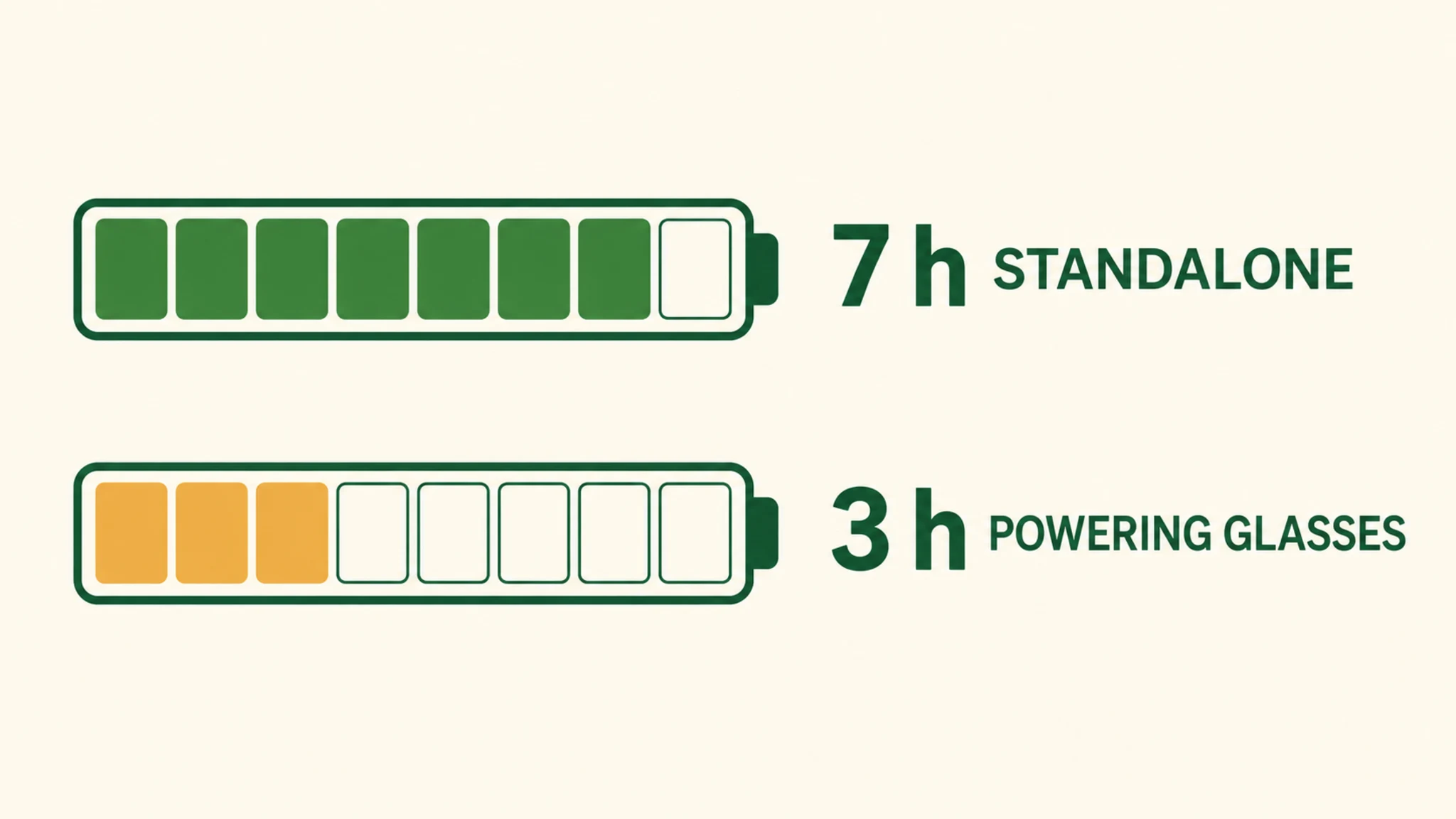
And that cost is measurable, because XREAL publishes it for the Beam Pro: up to 7 hours of standalone streaming, but up to 3 hours while powering AR glasses — the same device, the same activity, only the glasses load differing. Driving a dual-panel DisplayPort display roughly halves the source’s runtime; brightness and 120 Hz modes add further draw (directional guidance — no manufacturer publishes per-mode watts). MFR SPEC
The ecosystem’s designed answer is charging-while-watching: XREAL sells its Hub explicitly for gaming and streaming “while charging,” and the NEO hub folds a 10,000 mAh power bank into the display path — which is also what makes Switch 2 sessions possible at all. A power strategy is not an accessory afterthought for this category; it is the battery spec. MFR SPEC
03AI Camera Glasses: the 8-Hour Asterisk
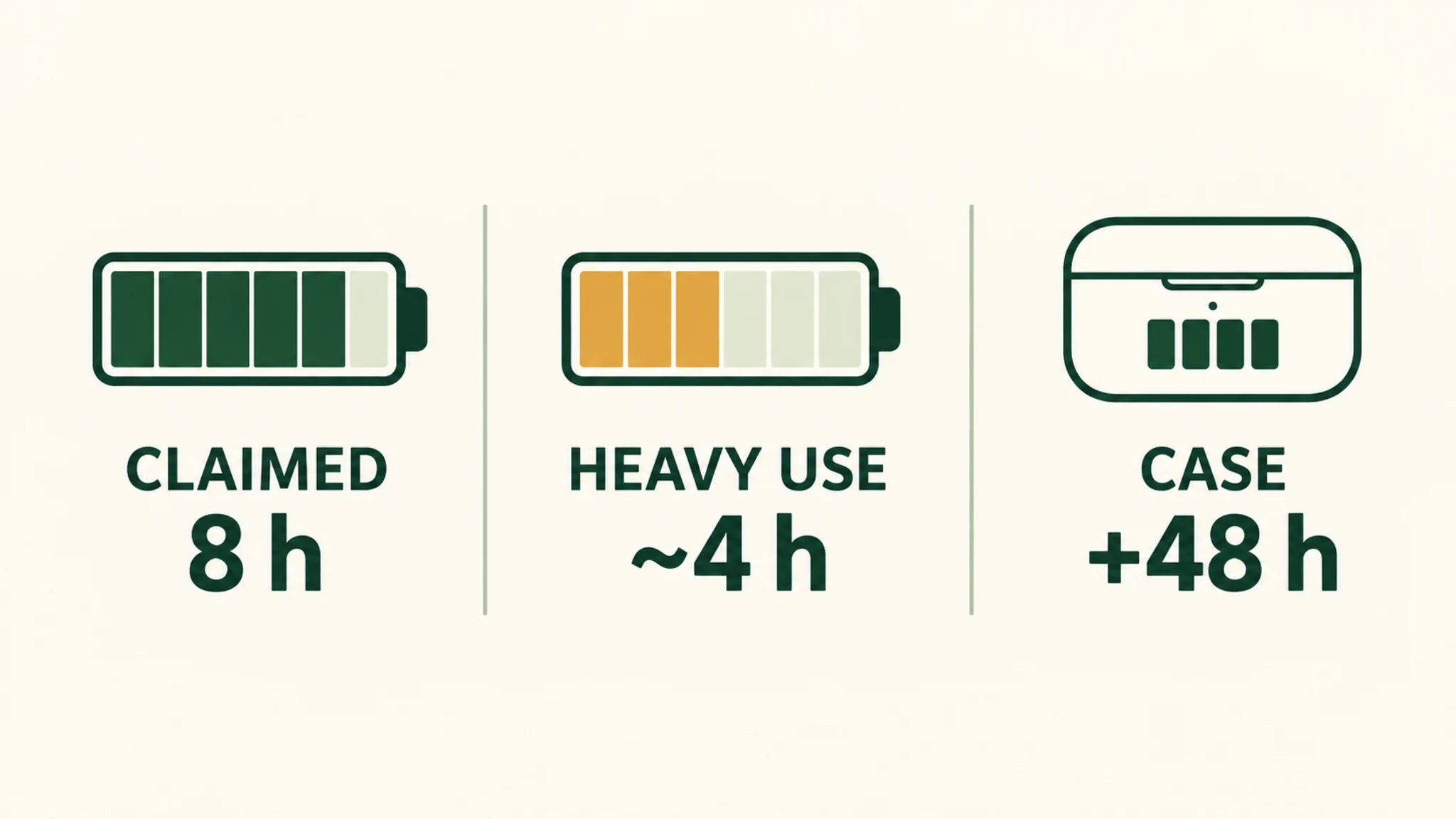
Meta’s official figures for Ray-Ban Meta Gen 2: up to 8 hours for moderate usage, a case providing up to 48 hours of charging (versus 32 for Gen 1, per Meta’s legal disclosures), and a 20-minute fast charge to 50%. The battery is not user-replaceable in either glasses or case. MFR SPEC
The asterisk is “moderate.” Reviewers under heavy mixed use — loud volume, continuous streaming, frequent assistant queries, capture sessions — report roughly four hours, and owner threads name the same drain factors: volume, streaming versus downloaded audio, camera time, AI-call frequency, notification volume. None of that contradicts the official number; it defines it. Oakley’s Vanguard variant draws owner reports near 6 hours in sport use. REVIEWS
Mitigations that are ours, labeled as ours: volume discipline, downloaded audio where the app supports it, the case as a habit (glasses charge whenever parked), and fast-charge top-ups before outings rather than chasing full charges. For the full troubleshooting path — charging contacts, case behavior, reset rituals — see our Ray-Ban Meta troubleshooting guide. OUR ANALYSIS
Our pick
XREAL Beam Pro
$249approx.
Android spatial companion: streaming, apps, and 3D capture for XREAL glasses.
Check price on AmazonRetailer links may earn us a commission — price approx., check retailer.
04Standalone Claims, Examined
The standalone tier quotes the boldest numbers with the least standardization. Rokid’s Glasses page claims “all-day long battery” with no hour figure published — a marketing claim, not a measurement. Memomind’s One specifies “over 16 hours mixed usage” and “3+ days connected standby” — specific, but self-reported. Meta’s Ray-Ban Display carries a reported ~6-hour mixed-use figure in press treatment; the official help-center figure was not retrievable at our research date. MFR SPEC
The honest reading rule for this tier: a claim with a stated test condition (hours + activity) is worth comparing; a claim without one (“all day”) is worth ignoring until owners weigh in. Our Rokid Glasses guide and Android XR tracker carry the per-device specifics as they are documented. OWNER REPORTS
Our pick
XREAL Beam Pro
$249approx.
Android spatial companion: streaming, apps, and 3D capture for XREAL glasses.
Check price on AmazonRetailer links may earn us a commission — price approx., check retailer.
05The Claimed-vs-Observed Table
| Device | Claimed | Observed / noted | Tier |
|---|---|---|---|
| XREAL One / One Pro / 1S, VITURE, RayNeo Air, Rokid Max 2 | No battery — host-powered | Host runtime roughly halves under glasses load | Confirmed (class mechanics + Beam Pro ratio) |
| XREAL Beam Pro (source) | 7 h streaming standalone; 3 h powering glasses; 30 min → 69% on 27 W | Manufacturer’s own both-ways figures | Confirmed (official page) |
| Ray-Ban Meta Gen 2 | Up to 8 h moderate; case to 48 h; 20 min → 50% | ~4 h heavy mixed use (review verdict) | Claim confirmed; heavy-use figure reported |
| Ray-Ban Meta Gen 1 | Up to 4 h; case 32 h | — | Confirmed (official) |
| Oakley Meta Vanguard | — | ~6 h sport use (owner report) | Reported (owner) |
| Rokid Glasses | “All-day long battery” — no figure | No independent number captured | Marketing claim only |
| Memomind One | >16 h mixed; 3+ d standby (connected) | Self-reported; unusually high vs peers | Claim confirmed as stated |
| Meta Ray-Ban Display | — | ~6 h mixed (press); official figure not retrieved | Reported |
| XREAL NEO hub (accessory) | 10,000 mAh bank + DP passthrough | The power strategy for Switch 2 sessions | Reported |
Retrieval dates: official-page figures September 2026; review and owner figures as attributed above. Where a cell would have required inventing a number — Even G2, Halliday G2 official endurance — we left it out rather than padding the table. OWNER REPORTS
06Charging-Case Math: What the Big Numbers Count
Case claims are system endurance, not single charges: glasses runtime multiplied by the recharges the case holds. Gen 2’s 8-hour figure against the 48-hour case implies roughly four to five full recharges in reserve — park the glasses in the case whenever they come off your face, and the system behaves like a device that never dies during a waking day. OUR ANALYSIS
Two behaviors worth knowing: when case and glasses charge together from one cable, the glasses take priority and the case tops up after — so the fastest morning routine is glasses-first. And the fast-charge tier (50% in 20 minutes on Gen 2) is sized for exactly the “heading out in half an hour” moment, not for battery-health folklore about full drains. OWNER REPORTS
07Habits That Actually Help
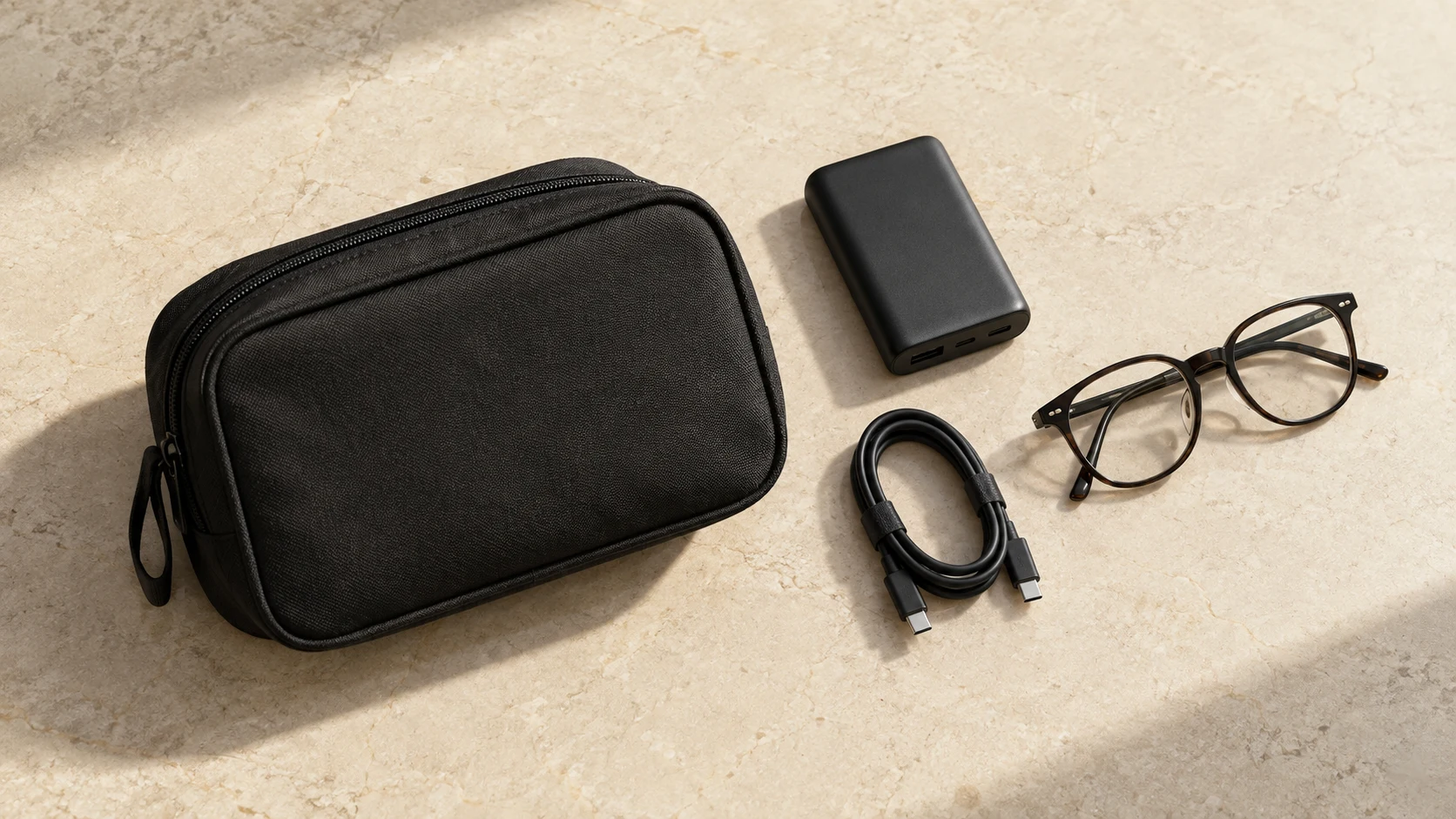
For tethered glasses: carry the power strategy — a powered hub or the NEO-class bank for long sessions, and match your source’s charger to its fast-charge wattage. For AI camera glasses: volume and streaming are the two biggest levers, the case habit is the biggest free one, and capture-heavy days are what the fast charge exists for. For everything: firmware updates carry real efficiency changes, which is one more reason the companion app stays installed. Each of these is labeled as guidance from the mechanics above, not from a lab we do not run. OUR ANALYSIS
why Netflix is the app that starts these battery conversations → the dependency matrix — the other hidden cost of each category →
Decoded verdict
Read the claim, then ask who is counting
Tethered glasses shift the battery question to your source device — halve its runtime and pack power accordingly. Camera glasses quote moderate use and deliver it, with cases that quietly add days. Standalone glasses quote the future; hold those claims to owner reports until standards exist. No category lies, exactly — each just counts differently, and now you know the arithmetic.
Provenance: official figures from XREAL, Meta (help and legal-disclosure pages), Rokid, and Memomind product pages retrieved September 2026; review and owner figures attributed per row; the case-math framing and habit guidance are our analysis, labeled as such. We are a research publication — no bench testing, no invented numbers, and gaps left visible rather than filled.
Our pick #2
VITURE Pro 2
$299approx.
The 2026 budget king: 63 g, diopter dials, 120 Hz — $299.
Check price on AmazonRetailer links may earn us a commission — price approx., check retailer.