Android XR glasses: what actually ships in fall 2026
Google’s Android XR platform is live on headsets and coming to glasses this fall. Here’s the device-by-device picture — what’s confirmed, what’s reported, and what’s still rumor — so you can decide whether to wait or buy now.
On this page
Fall 2026 is the moment Google’s Android XR platform moves from headsets to glasses. The platform is real and confirmed — it’s live on Samsung’s Galaxy XR headset today, and Google’s own audio glasses plus XREAL’s AURA are confirmed to ship this fall. But “this fall” is not a date, and several high-profile items — designer frames, Samsung’s own glasses, Meta’s next move — are reported or rumored, not confirmed. Here’s the device-by-device picture, with every claim tagged by how we know it.
The 30-second answer
Android XR is real and shipping now — on headsets. Google’s platform is “available now on headsets and coming soon to glasses,” per android.com/xr. This fall, two confirmed launches arrive: Google’s own audio glasses (intelligent eyewear) and XREAL’s AURA wired XR glasses. Display glasses are “stay tuned” for later 2026. If you want an AI-eyewear assistant, waiting a few months to compare against Ray-Ban Meta Gen 2 is rational; if you want a private screen today, current display glasses lose nothing by buying now.
Platform status verified against android.com/xr on September 12, 2026. Reported and rumored items are tagged as such throughout.

01The platform status: real, live, and coming to glasses
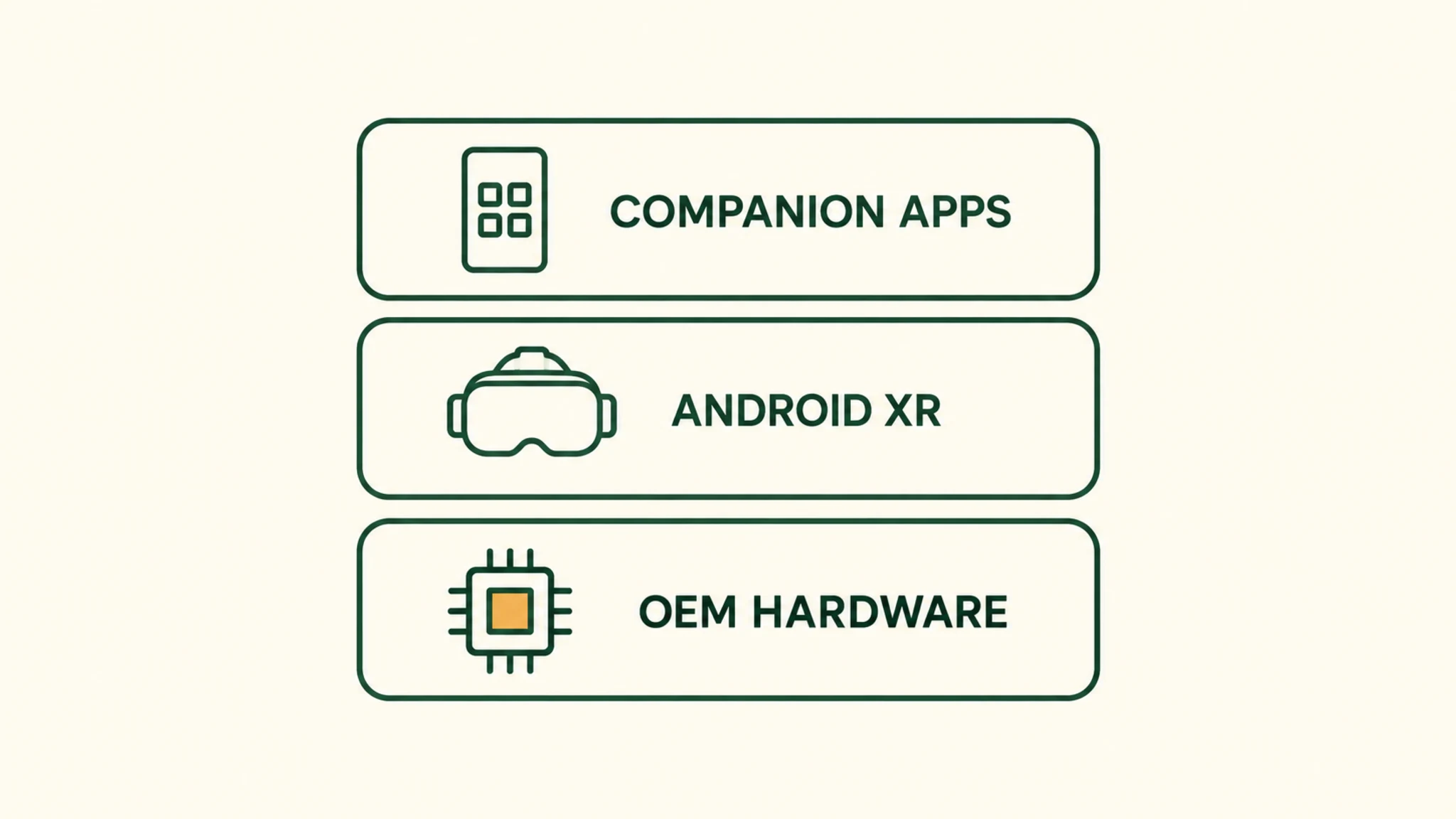
Android XR is Google’s operating system for spatial devices — an “AI-powered operating system that blends digital information with the real world,” per android.com/xr. It was announced in December 2024 in partnership with Samsung and Qualcomm, with Qualcomm partners including Lynx, Sony, and XREAL, and collaboration with Magic Leap. The platform is confirmed live: android.com/xr states it is “available now on headsets and coming soon to glasses.”MFR SPEC
The platform spans four device categories, confirmed on both android.com/xr and developer.android.com/xr: XR headsets, wired XR glasses, audio glasses, and display glasses. The developer platform is at Developer Preview 4 of the Android XR SDK, with official support for Unreal Engine and Godot added alongside Unity, OpenXR, WebXR, and Jetpack XR. MFR SPEC
The key distinction for buyers: Android XR is a platform, not a single device. It’s the layer where apps, assistants, and pairing live — the difference between betting on one pair of glasses and betting on a category. That framing drives the wait-or-buy decision below. OUR ANALYSIS
02What actually ships this fall
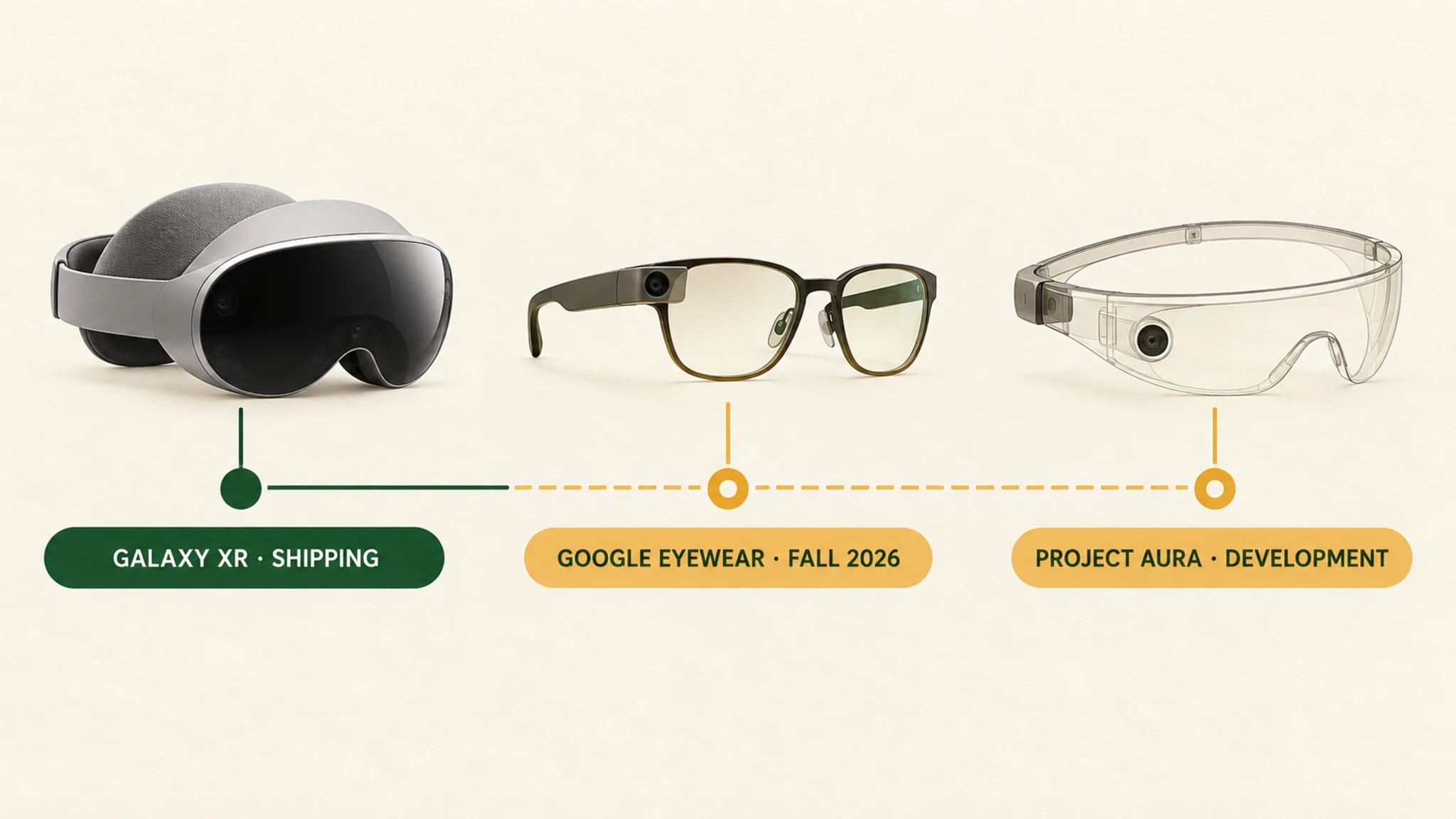
Here’s the device-by-device status, with every row tagged by how we know it. “Confirmed” means it’s on an official Google or manufacturer page we retrieved; “reported” means credible press or our research notes; “rumor” means labeled speculation with no primary source.MFR SPEC
| Device / platform | Status | Expected window | Tier |
|---|---|---|---|
| Android XR OS (platform) | Live; available now on headsets, coming soon to glasses | Now | Confirmed |
| Samsung Galaxy XR headset (Project Moohan) | Available now | Now | Confirmed |
| Google intelligent eyewear (audio glasses) | First collections launching this fall | Fall 2026 | Confirmed |
| XREAL AURA (wired XR glasses) | Coming this fall; reserve now | Fall 2026 | Confirmed |
| Android XR display glasses | “Stay tuned” / later 2026 | Later 2026, no firm date | Confirmed (no date) |
| Gentle Monster / Warby Parker frames | Announced May 2026, “coming this fall” | Fall 2026 | Reported |
| Samsung glasses (SM-O200P/J) | Referenced in regulatory filings, 2026 | 2026, unconfirmed | Rumor / reported |
| Meta (any Android XR role) | None found | — | Inference |
The confirmed core: Google’s audio glasses and XREAL’s AURA both ship this fall, per android.com/xr. Display glasses are confirmed to exist as a category but have no firm date — “stay tuned” is the official word. Everything below the confirmed rows is reported or rumored, and we’ve tagged it accordingly. MFR SPEC
03Samsung Galaxy XR: the headset that’s already here
The Samsung Galaxy XR headset (Project Moohan) is the reference Android XR device, and it’s available now — confirmed on android.com/xr, which describes it as “engineered by Samsung, powered by Android XR.” The page also notes an Explorer Pack 2 bundle offer that ran through June 30, 2026.MFR SPEC
Our August 2026 research notes add specifics: a $1,799 price, 4K micro-OLED panels, roughly 400 g with an external battery, and a year of Google AI Pro plus YouTube Premium included. These figures are reported, not re-verified this session — treat them as directional until confirmed against a primary source. OWNER REPORTS
Separately, two Samsung glasses models (SM-O200P/J) have surfaced in regulatory filings with 2026 shipping windows indicated. This is rumor/reported tier — we have not verified a primary source this session, and specific hardware details are not public. If Samsung ships both a headset and glasses, that would be the strongest ecosystem signal in the platform, but that’s inference until we see the glasses. OWNER REPORTS
Our pick
Ray-Ban Meta (Gen 2)
$409approx.
The default AI camera glasses: better battery, 3K video, huge style range.
Check price on AmazonRetailer links may earn us a commission — price approx., check retailer.
04Designer-frame partners: Gentle Monster and Warby Parker
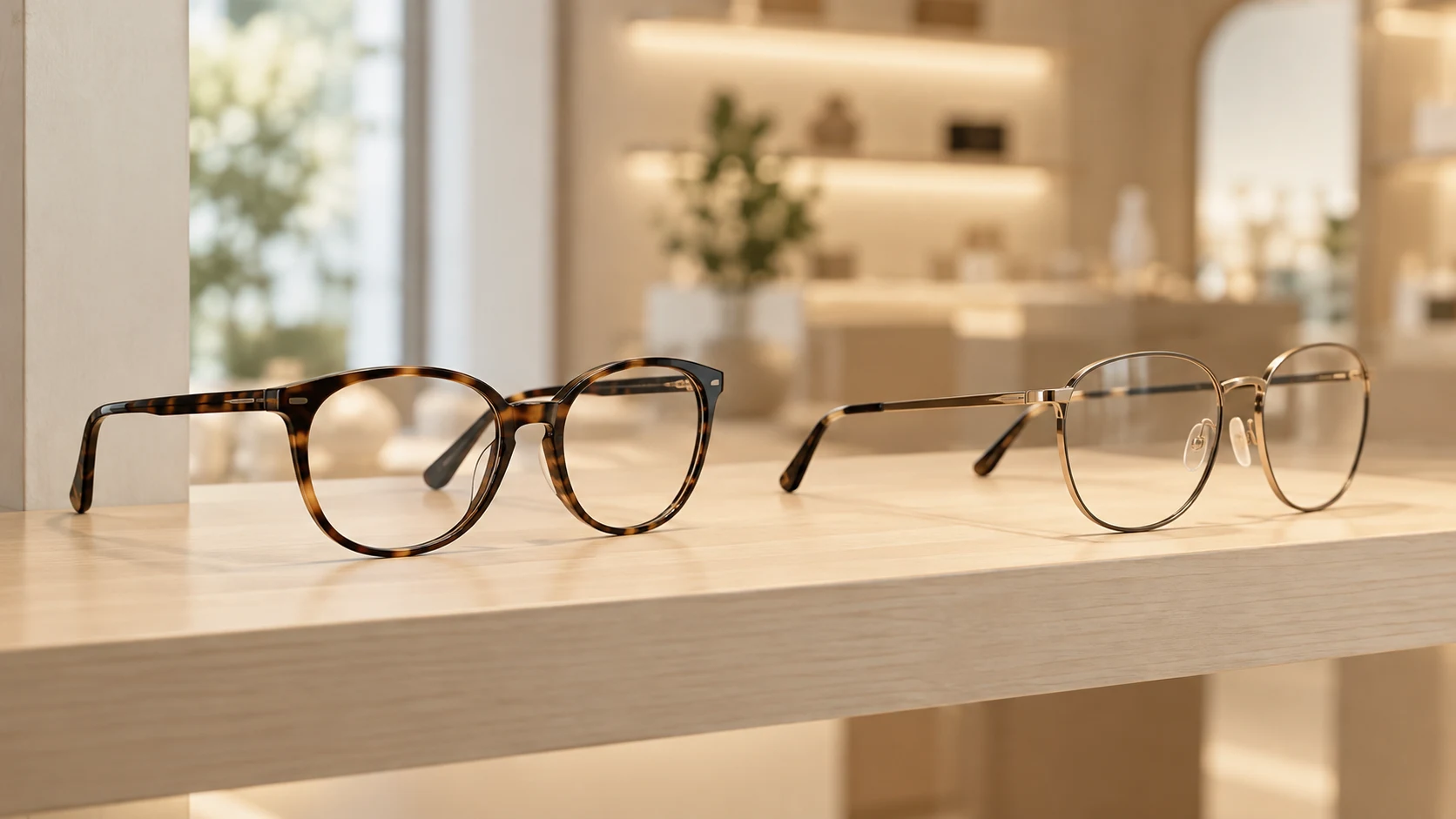
Google’s “intelligent eyewear” — the audio glasses coming this fall — has been reported to launch with frames from Gentle Monster and Warby Parker, announced around May 2026. This is reported tier: it comes from our August 2026 research notes, and we could not re-verify a primary source this session due to search-tool limits. The android.com/xr page confirms audio glasses are coming this fall but does not name the frame partners in the content we retrieved. OWNER REPORTS
The strategic logic is clear even if the specifics are unverified: Google is treating glasses as the next Android device class, and designer frames are the distribution play — the same move Meta made with Ray-Ban. If the Gentle Monster and Warby Parker partnerships hold, Google’s eyewear would arrive in fashion-forward frames that people actually want to wear, which is the single biggest adoption lever in this market. OUR ANALYSIS
Until we can confirm the partners and the exact launch date, treat the designer frames as “reported, coming this fall” — not as a confirmed product with a price. OWNER REPORTS
Our pick
Ray-Ban Meta (Gen 2)
$409approx.
The default AI camera glasses: better battery, 3K video, huge style range.
Check price on AmazonRetailer links may earn us a commission — price approx., check retailer.
05What it means for buyers now: wait or buy
The honest answer to “should I wait for Android XR?” depends on which category you’re shopping. Our rule, from the Android XR explainer:buy peripherals on need, platforms on maturity.OUR ANALYSIS
If you want a private screen — a virtual monitor for a Steam Deck, a travel display, a media screen — current tethered display glasses solve that today and lose nothing when Android XR arrives. A monitor is a monitor; it doesn’t die with a platform. Buying now is safe. OUR ANALYSIS
If you’re excited about AI eyewear — assistant-first camera glasses — waiting a few months is defensible. Google’s audio glasses are confirmed for this fall, and comparing Gemini-native glasses against the current AI-camera leader, the Ray-Ban Meta Gen 2, before committing $300–500 is rational patience. The one cohort that should absolutely wait: anyone about to spend $1,000+ on a 6DoF hybrid specifically for the platform experience — that’s a platform purchase, and the landscape changes this fall. OUR ANALYSIS
Android XR, explained — the full platform deep dive →06Meta Connect context: the other shoe
Meta Connect is scheduled for September 23–24, 2026, per the assignment brief. This is reported tier — we could not fetch a primary source this session, so treat the dates as reported, not confirmed. OWNER REPORTS
The context matters because Meta is the volume leader in AI camera glasses, and it runs its own stack — Ray-Ban Meta / Ray-Ban Display, Meta AI — entirely separate from Google’s Android XR. Google’s December 2024 Android XR announcement names Samsung, Qualcomm, Lynx, Sony, XREAL, and Magic Leap — no Meta. Our analysis: Meta is a direct competitor to Android XR glasses, not a partner. OUR ANALYSIS
We’re not publishing specific claims about what Meta will announce at Connect, because we don’t have a primary source for them. What’s reasonable to say: Meta’s XR glasses roadmap centers on the Ray-Ban Meta Gen 2 / Ray-Ban Display line, and a Connect announcement of next-gen glasses is plausible but unconfirmed. Watch for it, but don’t plan a purchase around a rumor. OWNER REPORTS
Decoded verdict
A real platform, a real fall, and a clear wait-or-buy rule
Android XR is not vaporware — it’s live on Samsung’s Galaxy XR headset today, and Google’s audio glasses plus XREAL’s AURA are confirmed to ship this fall. That’s the confirmed core, and it’s a genuine milestone for the category. The reported and rumored items — designer frames, Samsung’s own glasses, Meta’s Connect plans — are real possibilities, but they’re not confirmed, and we’ve tagged them as such.
For buyers, the rule is simple: buy a peripheral (a private screen) on need today; wait on a platform (AI eyewear) until this fall’s launches land and reviews are in. If you’re deciding between categories, start from our best smart glasses guide or the types of smart glasses explainer to see where Android XR fits.