XREAL vs RayNeo: polish against price
XREAL sells the most refined tethered-glasses experience; RayNeo sells the most picture per dollar. The gap between them narrowed dramatically in 2026 — here's exactly what each side buys you.
On this page
This is the comparison for buyers who've noticed that RayNeo's spec sheets read like flagships at mid-range prices — and wonder what XREAL's premium actually pays for. The honest answer in 2026: less than it used to. The RayNeo Air 4 Pro closed most of the picture-quality gap this year, while XREAL kept its advantages in the places specs don't print. Here's the breakdown.
The 30-second answer
Buy the RayNeo Air 4 Pro if you want the best picture per dollar — HDR10 tandem panels at roughly $299. Buy the XREAL One if you want the platform: on-glasses 3DoF anchoring, the deepest insert ecosystem, and the category’s lowest-regret purchase. Reviewers converge on “RayNeo for value, XREAL for refinement.”
Retailer links may earn us a commission — price approx., check retailer. Both lines refreshed in 2026 — this comparison tracks the current generation, not last year’s.
01The positioning: why the prices differ
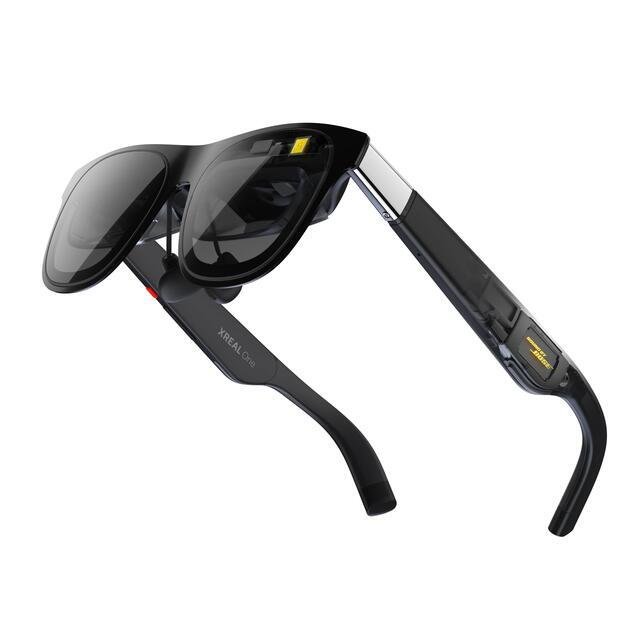
RayNeo (TCL's glasses brand) plays value-first: aggressive launch pricing, deep discount cycles (the Air 2s hit $159 on sale), and a fast product cadence that pushes new panels downmarket quickly — the Air 4 Pro brought HDR10 tandem micro-OLED to $299–399 months after the technology appeared in $500-plus flagships. The cost of the strategy shows up in software polish, spatial features, and the smaller western support footprint.REVIEWS
XREAL plays experience-first: the X1 chip makes spatial anchoring a hardware feature rather than an app, the insert ecosystem is the deepest in the industry, retail presence (Best Buy, Amazon first-party) leads the category, and the company ships the market's default “safe pick.” The cost is literal — the equivalent hardware specs cost $50–150 more than RayNeo's.
02Head-to-head: the matchups that matter
| XREAL One$399 | XREAL 1S$449 | RayNeo Air 2s$159 | RayNeo Air 3s Pro$269 | RayNeo Air 4 Pro$299 | |
|---|---|---|---|---|---|
| Price | $399 (list $499) | $449 (launched jan 2026) | $159 (regularly $159 on sale (list $299)) | $269 (frequent $80 promos) | $299 (street $299–399 depending on promos) |
| Resolution / eye | 1920 × 1080 | 1920 × 1200 | 1920 × 1080 | 1920 × 1080 | 1920 × 1080 |
| FOV | 50° | 50° | ≈46° | 46° | ≈46–48° |
| Brightness | 600 nits | up to 700 nits | good indoor | 1200 nits (to-eye) | 1200 nits |
| Weight | 84 g | 82 g | 76 g | 76 g | 76 g |
| HDR | — | — | — | — | HDR10 certified |
| Spatial | 3DoF on-glasses (X1) | 3DoF on-glasses (X1) | Mirror mode; app-dependent | Mirror mode; app-dependent | Mirror mode; app-dependent |
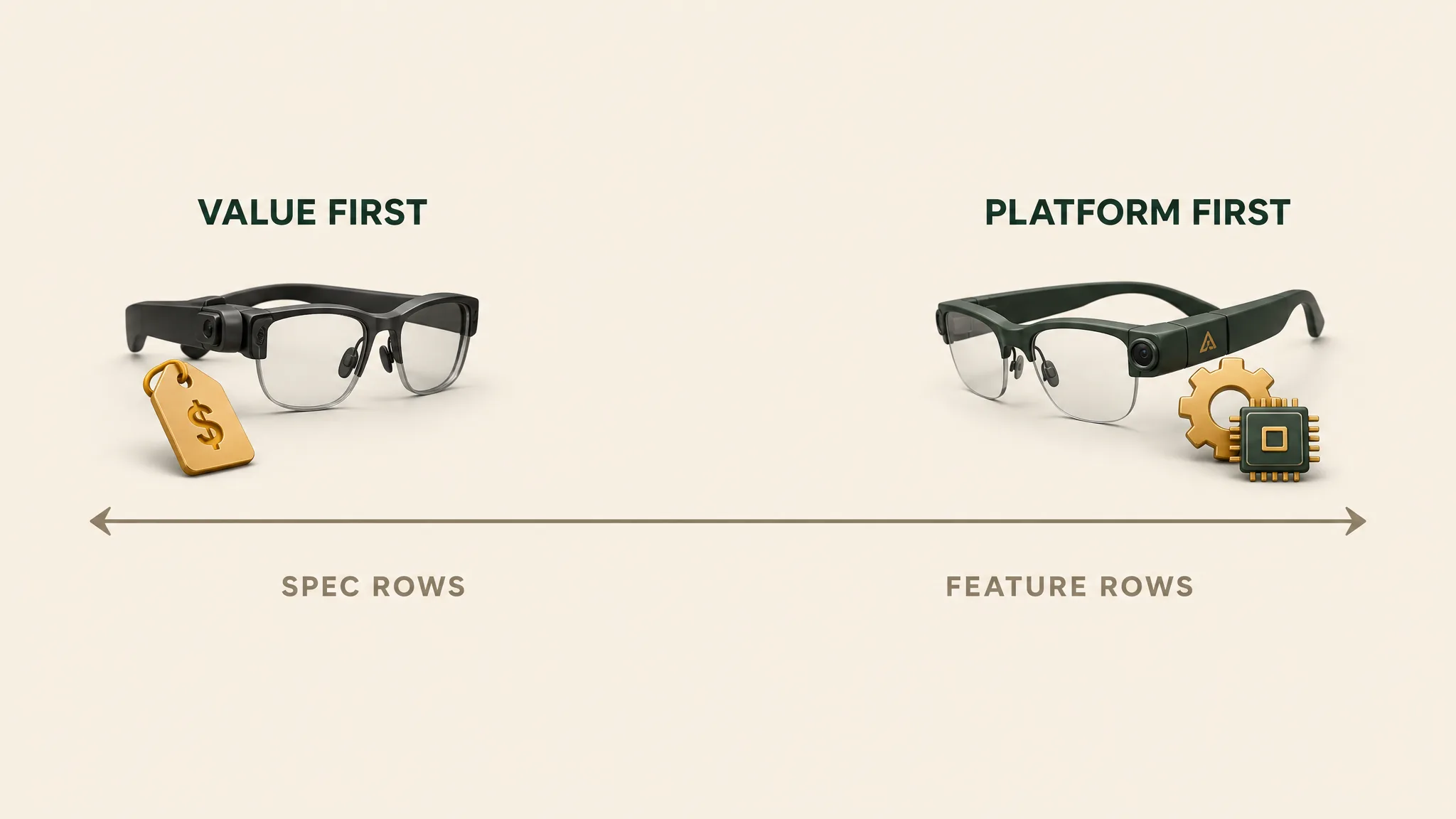
The pattern in one sentence: RayNeo wins spec rows, XREAL wins feature rows. The Air 4 Pro's panels genuinely outclass the XREAL One's on contrast and color; the XREAL One's anchor button genuinely outclasses anything RayNeo ships in spatial behavior. Which matters more depends entirely on what you'll do with the glasses.
Our pick
RayNeo Air 4 Pro
$299approx.
The value play for 2026: HDR10 panels, 1200 nits, Bang & Olufsen-tuned audio.
Check price on AmazonRetailer links may earn us a commission — price approx., check retailer.
03The experience gap: what the spec sheets don't print
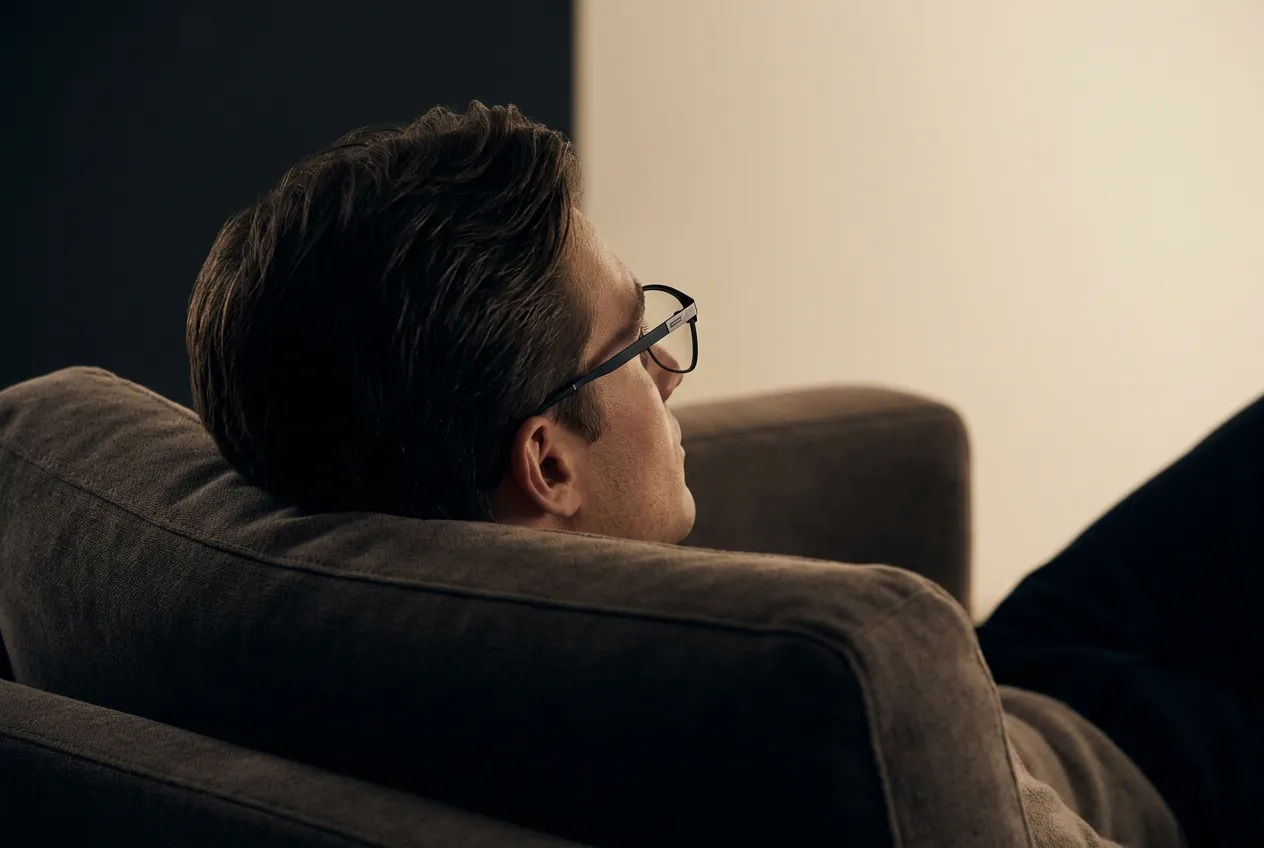
Three differences show up in daily use. Spatial behavior: XREAL's X1 anchors the screen from any source — Switch 2 through a hub, a PS5 through an adapter, a Raspberry Pi — while RayNeo's spatial modes depend on their app and source support, which is thinner outside mainstream phones and PCs. OWNER REPORTS Ecosystem depth: XREAL's accessory stack (NEO hub, Beam Pro) and insert ecosystem have no RayNeo equivalent at the same maturity; RayNeo counters with HDMI adapters priced kindly. Support network: XREAL's western retail and RMA path is broader — a real consideration for a device you'll wear on your face daily. Offset those with the honest pro-RayNeo column: picture quality per dollar (HDR10 really does show in dark scenes), loud tuned audio (the B&O collaboration measures well), and comfort — several owners report the 76 g RayNeo balance feels lighter than heavier XREAL flagships.REVIEWS
RayNeo Air 4 Pro
DisplayThe value play for 2026: HDR10 panels, 1200 nits, Bang & Olufsen-tuned audio.
$299approx.
Street $299–399 depending on promos
Pairs well with
- → 10Gbps rated USB-C cable — the included one is short; $12–18
- → Powered DP hub — for Switch 2 / handhelds; $60–100
- → Hard-shell case — the panels don't forgive pockets; $15–25
Accessory links may earn us a commission — same price either way. Prices approx.
Retailer links may earn us a commission — see our affiliate disclosure. Price approx., check retailer for current.
XREAL One
DisplayThe safe default: sharp 50° display with spatial smarts built into the glasses.
$399approx.
List $499, price cut to $399 in Dec 2025
Pairs well with
- → 10Gbps rated USB-C cable — the included one is short; $12–18
- → Powered DP hub — for Switch 2 / handhelds; $60–100
- → Hard-shell case — the panels don't forgive pockets; $15–25
Accessory links may earn us a commission — same price either way. Prices approx.
Retailer links may earn us a commission — see our affiliate disclosure. Price approx., check retailer for current.
Our pick
RayNeo Air 4 Pro
$299approx.
The value play for 2026: HDR10 panels, 1200 nits, Bang & Olufsen-tuned audio.
Check price on AmazonRetailer links may earn us a commission — price approx., check retailer.
04Who should buy which
Buy RayNeo Air 4 Pro if…
- → Your use case is “big beautiful screen” — movies, flights, bright rooms
- → Budget and picture per dollar lead — street ~$299 HDR10 panels
- → You’ll stay in mirror mode (spatial modes are app-dependent)
Buy XREAL One if…
- → Glasses are becoming part of how you compute (multi-device workflows)
- → You need anchoring that can’t depend on apps — 3DoF on-glasses (X1)
- → Prescription inserts or IPD-sensitive fit matter; you want the lowest-regret pick
Decoded verdict
RayNeo for the picture-first buyer, XREAL for the platform-first buyer
Buy RayNeo if your use case is fundamentally “big beautiful screen in front of my eyes” — movies, flights, bright rooms, budget ceilings. The Air 4 Pro at street ~$299 is the best pure-image value in the category, and the discounted Air 2s/3s make the category's cheapest credible experiments.
Buy XREAL if glasses are becoming part of how you compute: multi-device workflows, spatial anchoring that can't depend on apps, prescription inserts, IPD-sensitive fit, or you simply want the category's lowest-regret purchase. The $100–150 premium is the price of the ecosystem, and it's fair.
One more honest note: if you're torn exactly between the XREAL One and Air 4 Pro, you're choosing between anchoring and HDR — and our 3DoF guide plus your primary use case should break the tie faster than any spec table.
Frequently asked questions
Is RayNeo better than XREAL?
Is the RayNeo Air 4 Pro better than the XREAL One?
Which brand is better for prescription glasses wearers?
Our pick #2
XREAL One Pro
$599approx.
The widest tethered view in mainstream glasses: 57° FOV in two IPD sizes.
Check price on AmazonRetailer links may earn us a commission — price approx., check retailer.