XREAL One vs VITURE Pro 2: the $399 vs $299 decision
These two are the mainstream picks in display glasses, and they split on philosophy: the XREAL One puts spatial anchoring on a chip inside the glasses; the Pro 2 skips the chip, drops 21 grams, adds diopter dials, and undercuts by $100. Here's who should buy which.
On this page
The flagship fight gets the headlines, but the decision most buyers actually make is XREAL One ($399) vs VITURE Pro 2 ($299). Both are 1080p-per-eye, 50°-FOV, 120-Hz display glasses from the two brands that define the category. The difference isn't the panel — it's everything around it: where spatial anchoring lives, how much is on your face, and what happens when you wear a prescription. This guide settles it.
The 30-second answer
Buy the XREAL One if you want anchoring to just work from any device — the X1 chip handles 3DoF in the glasses, no app, no accessory. Buy the Pro 2 if you're nearsighted (diopter dials to −5.00 D beat insert hassle), want the lightest mainstream pair at 63 g, or the $100 matters. Full brand context: our XREAL vs VITURE ecosystem guide.
Retailer links may earn us a commission — disclosure. Prices approx., Sep 2026.
01The 30-second answer
| XREAL One$399 | VITURE Pro 2$299 | |
|---|---|---|
| Resolution / eye | 1920 × 1080 | 1920 × 1080 |
| FOV / refresh | 50° · up to 120 Hz | 50° · 120 Hz |
| Weight | 84 g | 63 g |
| Brightness | 600 nits | 1600 nits (claimed) |
| Spatial | 3DoF on-glasses (X1 chip) | 3DoF via VITURE software |
| Vision | Inserts (official + 3rd party) | Diopter dials 0 to −5.00 D (myopia only) |
| Released | Dec 2024 | Aug 2026 |
Source: manufacturer listings via our verified product database. Weight difference is 21 g — real but not night-and-day; brightness is claimed peak, not a like-for-like measurement.
02The 3DoF difference: chip vs software
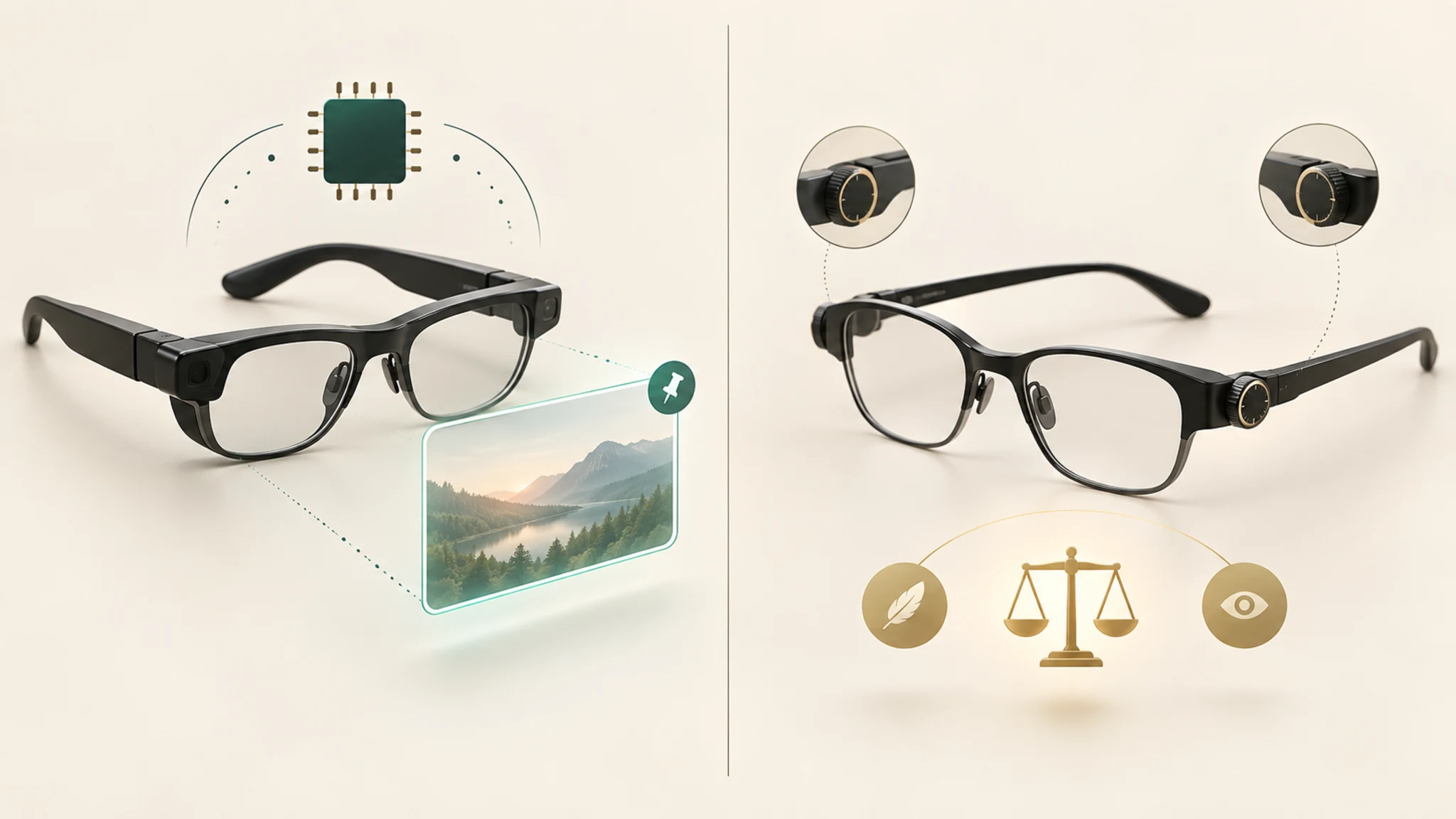
The One carries XREAL's X1 spatial chip: press the button and the virtual screen anchors in space, from any source — Steam Deck, laptop, phone, console-through-adapter — with no app and no accessory. This is the single biggest experiential difference between the two and the reason the One is our default recommendation for handheld gamers. MFR SPEC
The Pro 2's spatial modes run through VITURE's companion software on the source device. When your source is a phone or a device with the app installed, it works well; when it's a raw video feed (a console, an older laptop), there's nothing to run the software on, so the screen simply follows your head. For Steam Deck owners this barely matters — the Deck is a fixed-in-your-lap screen anyway — but for couch-and-plane anchor use, the One does it alone. MFR SPEC
The honest summary: anchoring-everywhere is worth $100 to some buyers and irrelevant to others. Know which you are before you pay for it.
Our pick
XREAL One
$399approx.
The safe default: sharp 50° display with spatial smarts built into the glasses.
Check price on AmazonRetailer links may earn us a commission — price approx., check retailer.
03Prescription: dials vs inserts
If you're nearsighted, the Pro 2's diopter dials (0 to −5.00 D) are the most friction-free vision solution in the category: twist until sharp, done, no extra purchase. The One needs prescription inserts — a mature ecosystem with official and third-party options, but an extra order, cost, and wait. MFR SPEC
The catch, and it's a hard one: dials correct myopia only. Any astigmatism (cylinder in your Rx) and the dials can't help — you need inserts on either pair. Our astigmatism guide covers why; the short version is that a spherical dial physically cannot correct a cylindrical error.
Our pick
XREAL One
$399approx.
The safe default: sharp 50° display with spatial smarts built into the glasses.
Check price on AmazonRetailer links may earn us a commission — price approx., check retailer.
04The verdict, by buyer
Buy the XREAL One if…
- → You want anchored screens from any device, zero software
- → You game on a Steam Deck or handheld and value 3DoF from the couch
- → You'll use inserts anyway (astigmatism) — the chip is the difference
Retailer link; commission disclosed.
Buy the VITURE Pro 2 if…
- → You're nearsighted without astigmatism — the dials win outright
- → 63 g matters: longest sessions, sensitive nose
- → Best specs-per-dollar is the goal ($299 vs $399)
Retailer link; commission disclosed.
Decoded verdict
Nearsighted without astigmatism: Pro 2. Everyone else who wants anchoring: One.
The Pro 2 is the best value in tethered display glasses, and for the specific buyer it's made for — simple myopia, weight-sensitive, price-aware — it isn't close. The One is the safer default for everyone else: the X1 chip delivers the category's core promise (a screen that stays put) from every device you'll ever plug into, and $100 amortized over years of use is a fair price for never thinking about software. Torn? Your prescription decides it before your budget does.
Frequently asked questions
Is the VITURE Pro 2 better value than the XREAL One?
Do the VITURE Pro 2 diopter dials fix astigmatism?
Which is better for a Steam Deck?
Our pick #2
VITURE Pro 2
$299approx.
The 2026 budget king: 63 g, diopter dials, 120 Hz — $299.
Check price on AmazonRetailer links may earn us a commission — price approx., check retailer.