XREAL One vs One Pro: the $200 question, settled
They share a name, a chip, and a 1080p panel — so what does the extra $200 actually buy? A wider, brighter view and, on the One Pro only, two frame sizes keyed to your IPD. Here's who each pair is for, decided spec by spec.
On this page
XREAL’s own lineup creates the comparison the brand never makes easy: the One and the One Pro look like siblings, share the X1 spatial chip and the same 1080p-per-eye panels, and differ on paper by a handful of rows — yet they suit genuinely different faces and budgets. This is the decision most XREAL buyers actually face, and it turns on one measurement most people never take: IPD.
The 30-second answer
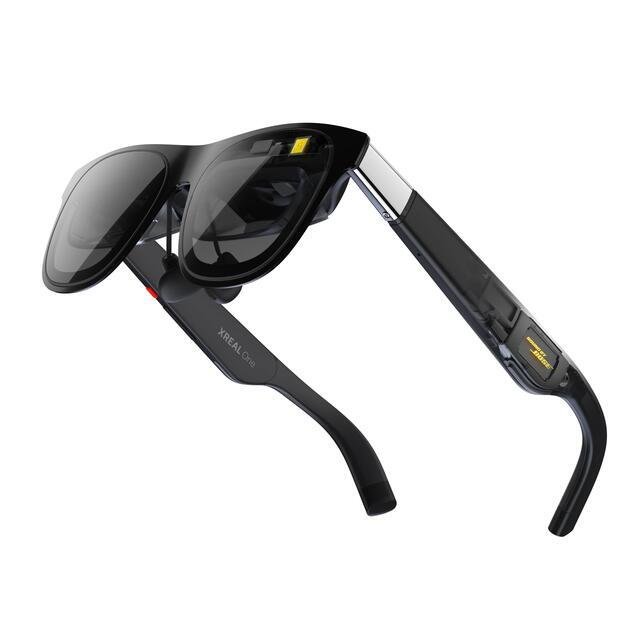
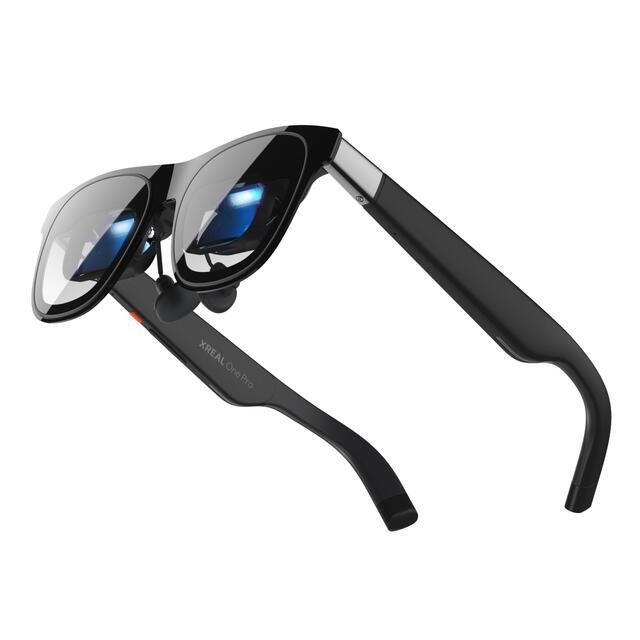
Buy the One ($399) if your IPD is anywhere near average — it’s the safe default with the same resolution, the same X1 spatial anchoring, and a lighter frame. Buy the One Pro ($599) if you want the wider 57° view, 700-nit brightness, and — the real reason it exists — a frame sold in two IPD sizes instead of one fixed size.
Retailer links may earn us a commission — price approx., check retailer. Prices verified Aug 2026; both models have cut list prices before.
01Same family, different buyers
Start with what’s identical, because it’s most of the experience. Both glasses carry XREAL’s X1 spatial chip, so both do 3DoF anchoring — the screen stays put in space — from any device with USB-C video output, no app or accessory required. Both render 1920×1080 per eye on micro-OLED panels at up to 120 Hz, both are tethered USB-C monitors that draw power and video from the same cable, and both use the same prescription-insert ecosystem (official frames ~$50–60 plus lenses, or third-party from VR Rock, Frame of Choice, Lensology). MFR SPEC If you haven’t met the concept, our 3DoF vs 6DoF explainer covers why that chip is the family’s superpower.
The differences are four, and none of them is resolution. The One Pro widens the field of view from 50° to 57°, raises peak brightness from 600 to 700 nits, moves to the newer Optic Engine 4.0 optics, and — uniquely in mainstream display glasses — ships in two frame sizeskeyed to your interpupillary distance. It is also three grams heavier (87 vs 84 g) and $200 more expensive. MFR SPEC
That asymmetry is the whole story: the One Pro is the One plus fit and immersion, not a sharper screen. Buyers who assume “Pro” means better pixels walk away disappointed; buyers who need the sizing or the wider view think it’s worth every dollar. The rest of this page turns that into a decision you can make in five minutes.
02Spec by spec: where the $200 goes
| XREAL One$399 | XREAL One Pro$599 | XREAL 1S$449 | |
|---|---|---|---|
| Price | $399 | $599 | $449 |
| Price note | List $499, price cut to $399 in Dec 2025 | Permanent cut from $649 | Launched Jan 2026 |
| Released | Dec 2024 | Jul 2025 | Jan 2026 |
| Resolution / eye | 1920 × 1080 | 1920 × 1080 | 1920 × 1200 |
| FOV | 50° | 57° | 50° |
| Brightness | 600 nits | 700 nits | up to 700 nits |
| Refresh | up to 120 Hz | up to 120 Hz | 120 Hz, 3 ms latency |
| Weight | 84 g | 87 g | 82 g |
| Chip | XREAL X1 spatial chip | XREAL X1 | XREAL X1 |
| Optics | Sony Micro-OLED (birdbath) | Sony Micro-OLED, Optic Engine 4.0 | Micro-OLED (birdbath) |
| Spatial | 3DoF anchoring on-glasses (screen stays put), smooth-follow mode | 3DoF on-glasses; 6DoF requires XREAL Eye camera add-on | 3DoF on-glasses |
| IPD | Fixed (one size) | Two sizes: M (57–66 mm) / L (66–75 mm) — order your IPD class | Fixed (one size) |
We’ve included the XREAL 1S ($449) as a third column because it’s the honest control in this comparison: it undercuts the One Pro by $150 while beating both glasses on resolution (1920×1200) — proof that the Pro’s premium buys something other than pixels. Every number above is manufacturer spec, verified August 2026; run your own eyes over the whole field in the comparison tool.MFR SPEC
03IPD: the axis that actually decides this
Interpupillary distance — the millimeter gap between your pupils — decides whether a birdbath display renders sharp to the edges or blurs and ghosts at the sides. Get it wrong and the symptoms are immediate: edge blur, ghosting, eye strain. OWNER REPORTS This is the one axis where the two glasses are structurally different, and it’s why “which should I buy?” has no universal answer.
The One Pro is sold in two sizes: M for 57–66 mm and L for 66–75 mm IPD — you order the size class that contains your measurement, and the optics align accordingly. The One is one fixed frame with no stated IPD range; like most fixed models it targets roughly the 58–70 mm band where most faces sit, without saying so on the box. MFR SPEC The full breakdown is in our IPD guide, including how to measure yourself in under a minute.
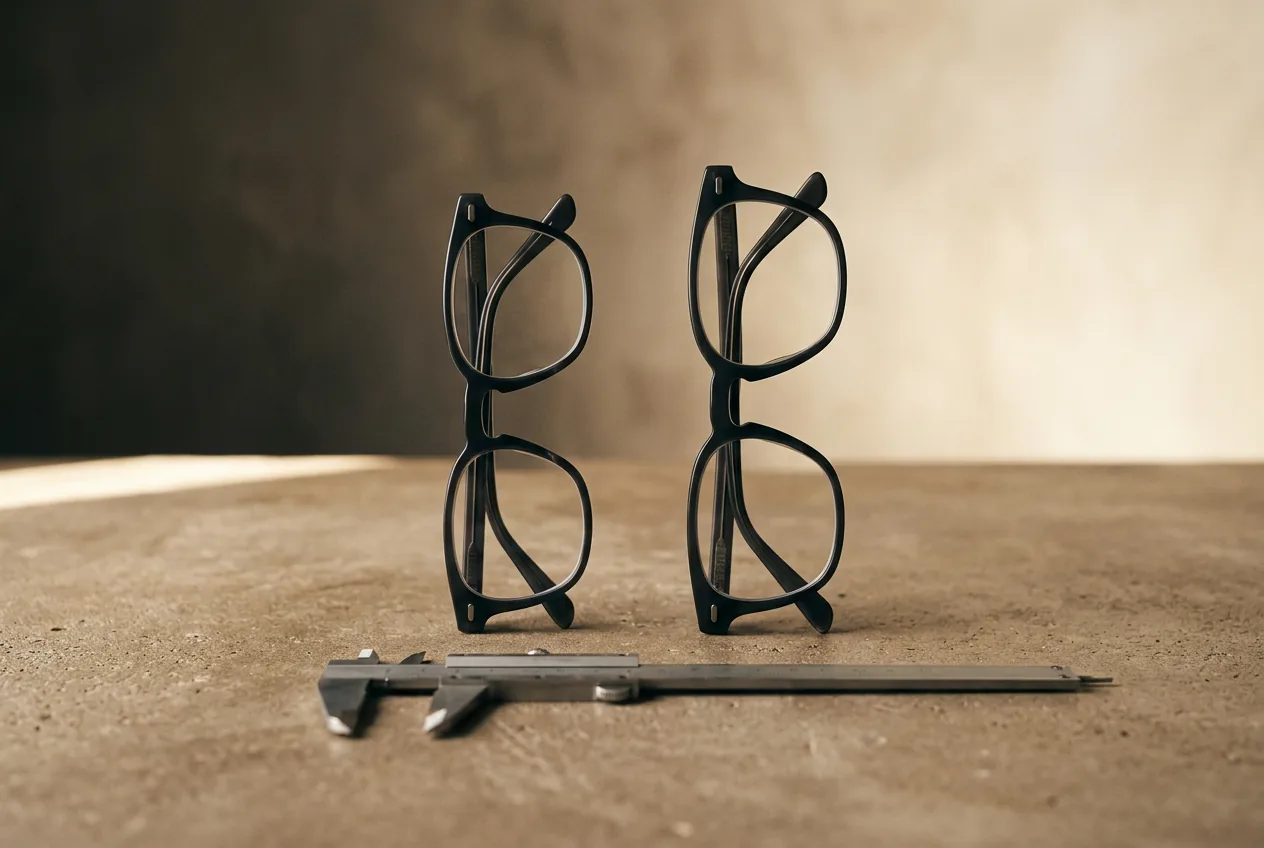
Practically: if your IPD lives between about 58 and 70 mm, both glasses will treat you well and the decision moves to price and FOV. If you measure below ~58 or above ~70, the calculus inverts — the One Pro stops being a luxury and becomes the fix, because ordering your size class is the only mainstream path to edge-to-edge sharpness. Buyers at the 66 mm boundary sit in both bands; we’d order the size matching the closer millimeter and keep the return window open.
Our pick
XREAL One
$399approx.
The safe default: sharp 50° display with spatial smarts built into the glasses.
Check price on AmazonRetailer links may earn us a commission — price approx., check retailer.
04What $200 more actually buys
+7°
Field of view
50° → 57°
+100
Peak nits
600 → 700 nits
+0
Pixels per eye
1920×1080 both
+3 g
On your nose
84 → 87 g
Here’s the honest ledger, spec-sourced and unembellished. The wider 57° FOV is the upgrade you’ll feel every session — the difference between a big TV at the front of the view and a screen that starts to wrap your peripheral vision; the trade-off is those 3 extra grams. The 100-nit bump matters in bright rooms and daytime travel, where the One’s 600 nits is adequate but the Pro’s 700 holds the image better.MFR SPEC The FOV trade-off in context is in our FOV explainer.
The Optic Engine 4.0 optics are the quiet upgrade: cleaner edge rendering than the One’s birdbath — but only when the optics match your IPD, which loops back to sizing. And the Pro’s platform has one door the One doesn’t: a stated path to 6DoF spatial tracking via XREAL’s Eye camera add-on, where the One is 3DoF for life.MFR SPEC
What the $200 does not buy is equally concrete: no resolution gain (identical 1080p panels), no refresh advantage (both up to 120 Hz), no weight saving (the Pro is heavier), and no exclusive access to the X1 spatial features. If you want the sharpest XREAL text instead of the widest XREAL view, the $449 1S makes both Pros look overpriced for reading work.
05The verdict, by buyer
| If you are… | Buy | Why |
|---|---|---|
| A first-time buyer who wants it to just work | One — $399 | Same X1 spatial anchoring and 1080p as the Pro, $200 lighter on the wallet, 84 g on the nose. |
| Outside the ~58–70 mm IPD band | One Pro — M or L | The only mainstream pair sold in two IPD sizes; ordering your size class fixes edge blur the One can’t. |
| A home-cinema immersion seeker, money secondary | One Pro — $599 | 57° and 700 nits is the most cinematic view XREAL sells. |
| A text-and-code worker watching the budget | Neither — 1S, $449 | 1920×1200 per eye and 3 ms latency beat both on sharpness for less than the Pro. |
| A plane-and-commute movie watcher | One — $399 | Lighter frame, same screen; spend the savings on a case and cable. |
XREAL One
DisplayThe safe default: sharp 50° display with spatial smarts built into the glasses.
$399approx.
List $499, price cut to $399 in Dec 2025
Pairs well with
- → 10Gbps rated USB-C cable — the included one is short; $12–18
- → Powered DP hub — for Switch 2 / handhelds; $60–100
- → Hard-shell case — the panels don't forgive pockets; $15–25
Accessory links may earn us a commission — same price either way. Prices approx.
Retailer links may earn us a commission — see our affiliate disclosure. Price approx., check retailer for current.
XREAL One Pro
DisplayThe widest tethered view in mainstream glasses: 57° FOV in two IPD sizes.
$599approx.
Permanent cut from $649
Pairs well with
- → 10Gbps rated USB-C cable — the included one is short; $12–18
- → Powered DP hub — for Switch 2 / handhelds; $60–100
- → Hard-shell case — the panels don't forgive pockets; $15–25
Accessory links may earn us a commission — same price either way. Prices approx.
Retailer links may earn us a commission — see our affiliate disclosure. Price approx., check retailer for current.
Decoded verdict
Buy the One for the safe $399 default; buy the One Pro for fit and immersion — not sharpness
Buy the One ($399) if your IPD is unremarkable and you want the category’s lowest-risk purchase: identical resolution and spatial features to the Pro, the lightest frame of the two, and $200 that stays in your pocket for inserts, a hub, or the next generation. It remains our top display-glasses pick for most people, and the pick we’d hand a first-timer in the whole-market guide too.
Buy the One Pro ($599) when either statement is true: your IPD needs the M or L sizing (measure first — here’s how), or you specifically want the widest, brightest private cinema XREAL makes and will feel the extra 3 g only at the register. For immersion-first buyers it’s the best XREAL; for everyone else it’s a premium on two rows of the spec sheet.
And against the wider market: if you’re not loyal to XREAL, the VITURE comparison is the other half of the decision — VITURE’s Pro 2 at $299 undercuts both with diopter dials, and the $549 Beast out-specs the One Pro on paper.
Our pick #2
XREAL One Pro
$599approx.
The widest tethered view in mainstream glasses: 57° FOV in two IPD sizes.
Check price on AmazonRetailer links may earn us a commission — price approx., check retailer.
Frequently asked questions
Is the XREAL One Pro worth $200 more than the One?
Which XREAL One Pro size should I order — M or L?
Is the XREAL One Pro sharper than the XREAL One?
Our pick #2
XREAL One Pro
$599approx.
The widest tethered view in mainstream glasses: 57° FOV in two IPD sizes.
Check price on AmazonRetailer links may earn us a commission — price approx., check retailer.