VITURE vs RayNeo: the battle for the sub-$300 display glasses
The most practical comparison in the category: VITURE's Pro 2 against RayNeo's Air line at the prices people actually pay. Dials against HDR10, 63 grams against 76 — and a genuine winner.
On this page
The flagship fights get the headlines, but the sub-$300 tier is where most display-glasses purchases actually happen — and in 2026 this tier has two genuinely excellent candidates. VITURE's Pro 2 and RayNeo's Air 4 Pro both cost about $299 and both embarrass last year's flagships. They also embody opposite theories of what matters. This comparison settles it.
The 30-second answer
Buy the VITURE Pro 2 if you’re nearsighted — the built-in diopter dials correct 0 to −5.00 D the minute they arrive. Buy the RayNeo Air 4 Pro if your vision is corrected-or-fine — HDR10 tandem panels win the picture for movies. A rare clean split: your eyes pick the winner.
Retailer links may earn us a commission — price approx., check retailer. Both lines refreshed in 2026 — this comparison tracks the current generation, not last year’s.
01The matchup, priced
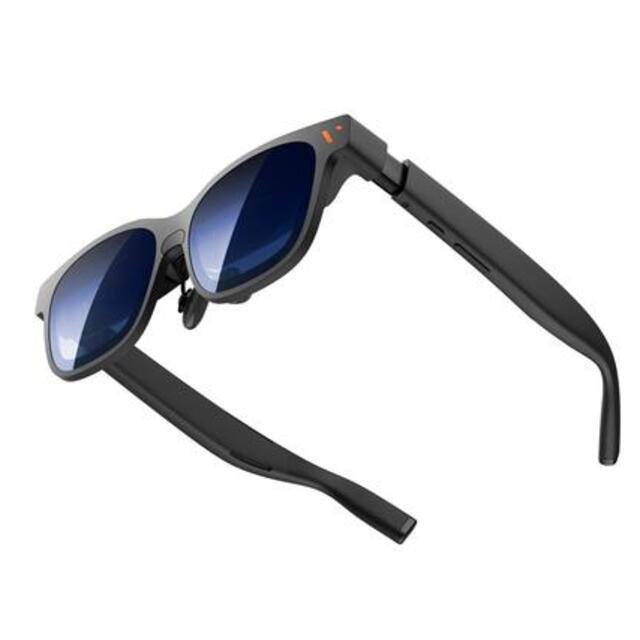
VITURE's entry: the Pro 2 at $299 (launched August 2026 as the fifth-anniversary model) — 1080p per eye, 120 Hz, a claimed 1600-nit panel, 63 grams, and diopter dials. RayNeo's entry: the Air 4 Pro at $299–399 street — 1080p per eye, HDR10 tandem panels, 1200 nits, 120 Hz adaptive, 76 grams, B&O-tuned audio. Beneath them: RayNeo's Air 3s ($269, frequent deep sales) and Air 2s ($159 on sale) hold the ultra-budget line, while VITURE's stack climbs upward through Luma to the $549 Beast flagship. MFR SPEC
02Spec by spec at $299
| VITURE Pro 2$299 | RayNeo Air 4 Pro$299 | |
|---|---|---|
| Price | $299 | $299 |
| Resolution / eye | 1920 × 1080 | 1920 × 1080 |
| FOV | 50° | ≈46–48° |
| Brightness | 1600 nits (claimed) | 1200 nits |
| HDR | — | HDR10 |
| Weight | 63 g | 76 g |
| Diopter dials | 0 to −5.00 D (myopia; no astigmatism correction) | Inserts only |
| Audio | Built-in speakers | Co-tuned with Bang & Olufsen |
| Spatial | 3DoF via brand software | 3DoF via brand software |
Read the table twice and notice how even it is — that's the 2026 budget tier's story. The differentiators have left the spec sheet and moved into the two rows below.
Our pick
VITURE Pro 2
$299approx.
The 2026 budget king: 63 g, diopter dials, 120 Hz — $299.
Check price on AmazonRetailer links may earn us a commission — price approx., check retailer.
03Dials vs HDR: the actual decision
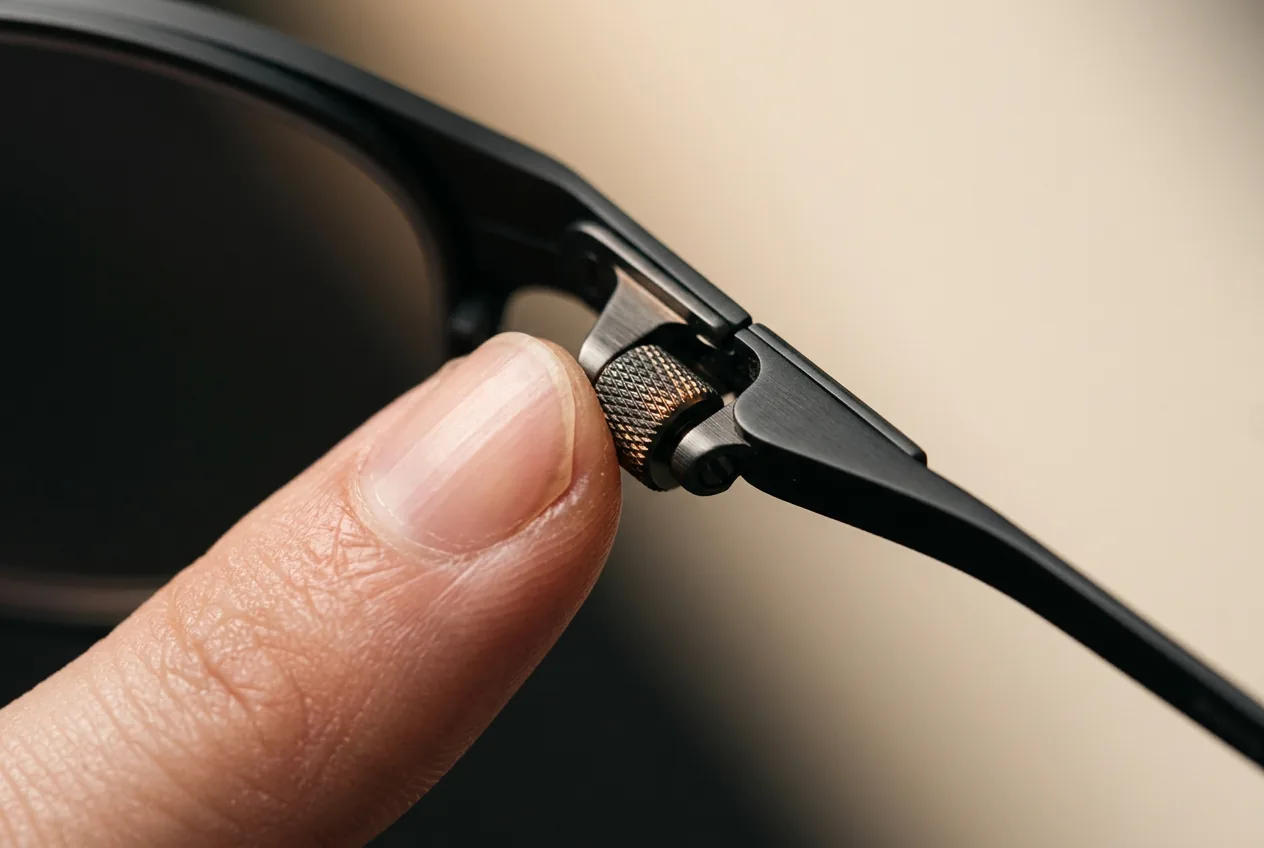
If you're nearsighted, the Pro 2's dials are worth more than any panel spec. Correcting 0 to −5.00 D per eye without ordering anything means the glasses work perfectly the minute they arrive — and every myopic friend who tries them can refocus in five seconds. For buyers who would otherwise need inserts (a $60–150, non-returnable custom order), the dials are the difference between “bought glasses” and “bought a system.” The asterisk stays: dials correct sphere only — astigmats need inserts on either brand.
If your vision is corrected-or-fine and you watch things, the Air 4 Pro's HDR10 panels win the picture. Tandem micro-OLED delivers real contrast in dark scenes — reviewers consistently score it above same-price rivals for movies — and the brighter panel holds up in sunlit rooms. Add the better speakers and the value tilt is real. REVIEWS
The secondary axis is weight: the Pro 2's 63 grams is the lightest in the mainstream tier — a meaningful comfort edge for 90-minute-plus sessions and smaller noses. The Air 4 Pro's 76 grams is well-balanced but noticeable by comparison.
VITURE Pro 2
DisplayThe 2026 budget king: 63 g, diopter dials, 120 Hz — $299.
$299approx.
Launched Aug 2026 (5th-anniversary line)
Pairs well with
- → 10Gbps rated USB-C cable — the included one is short; $12–18
- → Powered DP hub — for Switch 2 / handhelds; $60–100
- → Hard-shell case — the panels don't forgive pockets; $15–25
Accessory links may earn us a commission — same price either way. Prices approx.
Retailer links may earn us a commission — see our affiliate disclosure. Price approx., check retailer for current.
RayNeo Air 4 Pro
DisplayThe value play for 2026: HDR10 panels, 1200 nits, Bang & Olufsen-tuned audio.
$299approx.
Street $299–399 depending on promos
Pairs well with
- → 10Gbps rated USB-C cable — the included one is short; $12–18
- → Powered DP hub — for Switch 2 / handhelds; $60–100
- → Hard-shell case — the panels don't forgive pockets; $15–25
Accessory links may earn us a commission — same price either way. Prices approx.
Retailer links may earn us a commission — see our affiliate disclosure. Price approx., check retailer for current.
Our pick
VITURE Pro 2
$299approx.
The 2026 budget king: 63 g, diopter dials, 120 Hz — $299.
Check price on AmazonRetailer links may earn us a commission — price approx., check retailer.
04The verdict
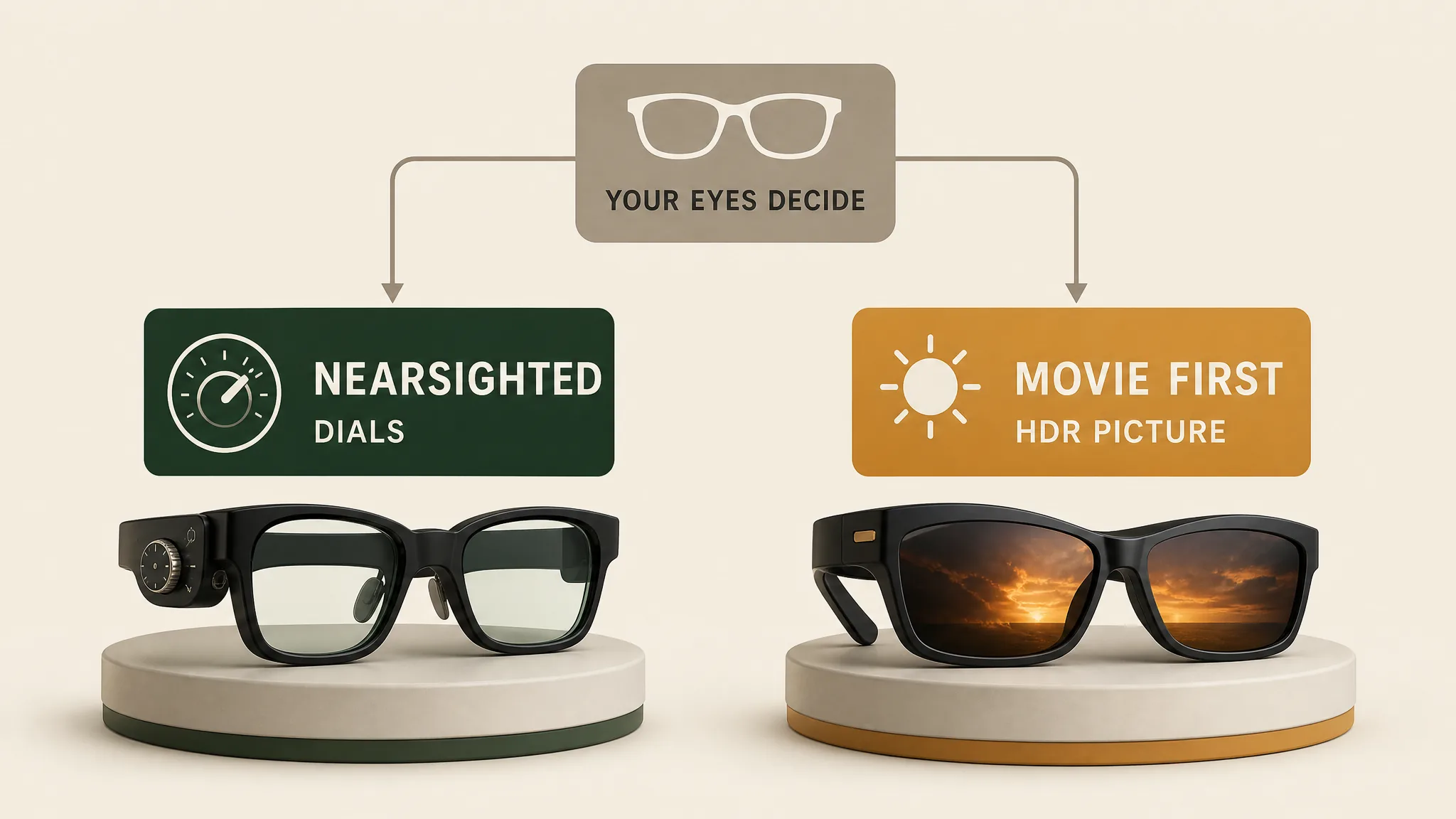
Buy VITURE Pro 2 if…
- → You’re nearsighted (simple myopia) — dials correct 0 to −5.00 D instantly
- → Comfort leads — 63 g is the lightest mainstream pair, for long sessions
- → You’d rather skip the $60–150 non-returnable insert order
Buy RayNeo Air 4 Pro if…
- → Your vision is corrected-or-fine and you watch things — HDR10 wins the picture
- → Better contrast, color, and audio matter most under $350
- → You need inserts — support to −8.00 D sphere
Decoded verdict
A rare clean split: your eyes pick the winner
Nearsighted buyers (simple myopia, no astigmatism): VITURE Pro 2. The dials alone decide it — instant correction, lightest weight, and a total price that stays at $299.
Everyone else: RayNeo Air 4 Pro. Better contrast, better color, better audio, equal refresh — the strongest picture under $350, with inserts to −8.00 D when you need correction.
Ultra-budget buyers: watch RayNeo sale cycles — the Air 3s at deep discount is the cheapest “real” pair, and the Air 2s at $159 is the cheapest experiment that isn't junk. VITURE's answer at that price point is waiting for Pro 2 promos rather than a third model.
And if you're eyeing either brand's higher tiers — the Beast, Luma, X3 Pro — the ecosystem question comes back, and that's when to read XREAL vs VITURE or our full display-glasses rankings before committing.
Frequently asked questions
Which is better, VITURE Pro 2 or RayNeo Air 4 Pro?
Is the RayNeo Air 3s still worth buying in 2026?
Do VITURE or RayNeo glasses work with iPhone?
Our pick #2
RayNeo Air 4 Pro
$299approx.
The value play for 2026: HDR10 panels, 1200 nits, Bang & Olufsen-tuned audio.
Check price on AmazonRetailer links may earn us a commission — price approx., check retailer.