Best XREAL glasses 2026: every current model, decided
You’ve already picked the brand — now pick the pair. Four current XREALs from $329 to $599, settled with street-price history, spec-by-spec strengths, and the failure modes each one ships with.
On this page
- 01 The lineup, priced honestly
- 02 XREAL One: the default, and still the pick
- 03 XREAL One Pro: premium optics, and the only pair that sizes to your face
- 04 XREAL 1S: the midrange value — and the sharpest screen in the family
- 05 XREAL Air 2 Pro: the proven budget floor — with an asterisk
- 06 How to decide in two minutes
- 07 XREAL vs the field: the honest paragraph
XREAL sells four current pairs of display glasses, priced like a ladder rung by rung: $329, $399, $449, $599. The brand decision is made — this page is the model decision. We’ve stacked the lineup against itself using published specifications, owner reports, and stated criteria, plus the piece most roundups miss: street-price history. The One has been $399 — not $499 — since December 2025, and the One Pro took a permanent cut from $649. Every pick below names its honest failure modes, because the right answer depends on your IPD, your correction, and your budget — not on a spec-sheet winner.
The 30-second answer
XREAL One ($399 approx.) — best for most buyers: the safe default with on-glasses spatial anchoring and the lineup’s deepest value after its price cut. XREAL One Pro ($599 approx.) — the premium play: widest 57° view, brightest panel, and the only pair sold in two IPD sizes. XREAL 1S ($449 approx.) — midrange value: 1920×1200 per eye, the sharpest text XREAL ships. XREAL Air 2 Pro ($329 approx.) — the proven budget floor, with catches.
Retailer links may earn us a commission — price approx., check current price before buying. Prices as of Sep 2026; XREAL has cut list prices twice in the past year.
01The lineup, priced honestly
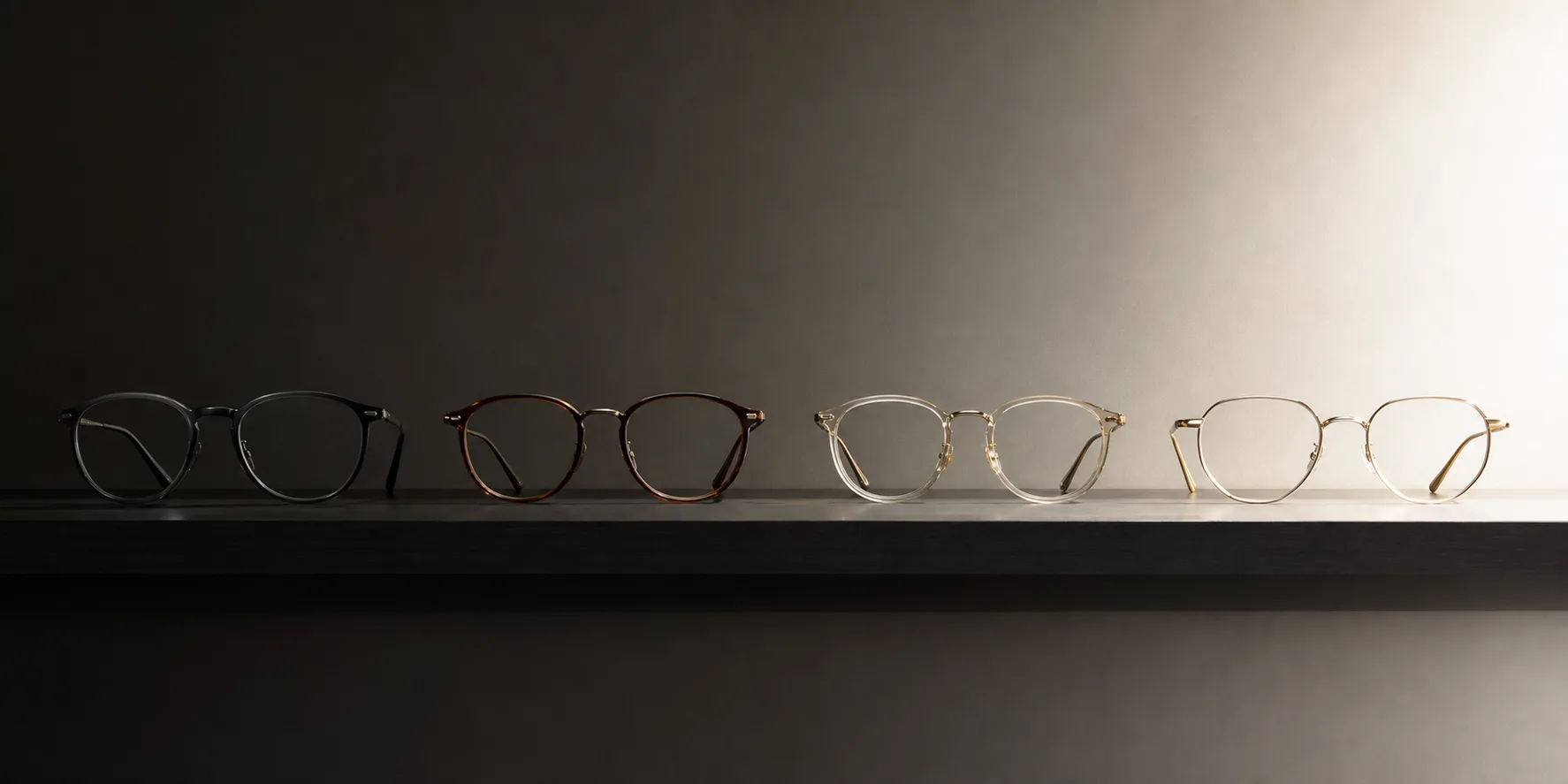
Four current models, one ladder. The XREAL One anchors the middle at $399, the One Pro crowns it at $599, the January 2026 1S slots between them at $449, and the October 2023 Air 2 Pro holds the floor at $329. That ordering looks clean on a shelf — and it was different a year ago, which is where most roundups go stale.
XREAL repriced aggressively: the One fell from $499 to $399 in December 2025, and the One Pro took a permanent cut from $649. Competing roundups still quote the old numbers, which changes their math: at $499, the One looked like a skippable mid-tier; at $399 it’s the default buy. MFR SPEC Treat every figure below as approximate and check current price before deciding — this brand reprices.
| XREAL One$399 | XREAL One Pro$599 | XREAL 1S$449 | XREAL Air 2 Pro$329 | |
|---|---|---|---|---|
| Price | $399 | $599 | $449 | $329 |
| Price note | List $499, price cut to $399 in Dec 2025 | Permanent cut from $649 | Launched Jan 2026 | Frequent sales $299–329 (list $449) |
| Released | Dec 2024 | Jul 2025 | Jan 2026 | Oct 2023 |
| Resolution / eye | 1920 × 1080 | 1920 × 1080 | 1920 × 1200 | 1920 × 1080 |
| FOV | 50° | 57° | 50° | 46° |
| Brightness | 600 nits | 700 nits | up to 700 nits | 500 nits class |
| Refresh | up to 120 Hz | up to 120 Hz | 120 Hz, 3 ms latency | up to 120 Hz |
| Weight | 84 g | 87 g | 82 g | 75 g |
| Optics | Sony Micro-OLED (birdbath) | Sony Micro-OLED, Optic Engine 4.0 | Micro-OLED (birdbath) | Sony Micro-OLED |
| Spatial | 3DoF anchoring on-glasses (screen stays put), smooth-follow mode | 3DoF on-glasses; 6DoF requires XREAL Eye camera add-on | 3DoF on-glasses | 3DoF requires Beam / Beam Pro accessory |
| IPD | Fixed (one size) | Two sizes: M (57–66 mm) / L (66–75 mm) — order your IPD class | Fixed (one size) | Fixed (one size) |
Two structural notes before the per-model verdicts: the 1S is the only 1200p panel in the family (1920×1200 per eye — sharper text than the 1080p trio), and it’s also the newest, so its long-term track record is the shortest. The Air 2 Pro is the only legacy model — its spatial anchoring lives in a separate Beam accessory, not on the glasses. Run any two of them head-to-head in our comparison tool if you want the raw table.MFR SPEC
02XREAL One: the default, and still the pick
The $399 One is the model we’d hand most buyers, and the December 2025 cut from $499 is most of the reason. You get the family’s core trick —3DoF anchoring computed on the glasses themselves, so the screen stays put in space from any USB-C video source, with no app, no hub, and no companion device — plus a smooth-follow mode for when you want the display pinned to your head instead. MFR SPEC Spec for spec: 1920×1080 per eye on Sony micro-OLED, 50° field of view, 600 nits, up to 120 Hz, 84 g, released December 2024.
The honest failure modes, so nobody is surprised at checkout. First: weight. 84 g is mid-pack in this lineup but well above the lightest rivals, and owner reports put bridge fatigue above the two-hour mark for some faces. Second: text. 1080p per eye is good for movies and games but not class-leading for long reading sessions — the panels resolve it, your eyes just work harder than they would on the 1S.OWNER REPORTS Neither flaw is disqualifying at $399; both are reasons the other models exist.
XREAL One
DisplayThe safe default: sharp 50° display with spatial smarts built into the glasses.
$399approx.
List $499, price cut to $399 in Dec 2025
Pairs well with
- → 10Gbps rated USB-C cable — the included one is short; $12–18
- → Powered DP hub — for Switch 2 / handhelds; $60–100
- → Hard-shell case — the panels don't forgive pockets; $15–25
Accessory links may earn us a commission — same price either way. Prices approx.
Retailer links may earn us a commission — see our affiliate disclosure. Price approx., check retailer for current.
Strengths
- On-glasses 3DoF anchoring from any USB-C video source — no app, no hub
- $399 after the Dec 2025 cut from $499 — the family's value anchor
- Same 1080p panels and anchoring behavior as the $599 One Pro
- Takes prescription inserts; mature official and third-party ecosystems
Weaknesses
- 84 g — owner reports note fatigue past the two-hour mark
- 1080p per eye: good, not class-leading, for text work
- One fixed frame size — no IPD sizing if your face sits outside the average band
Buy the One if you want one pair for movies, gaming, and occasional desk work at the family’s safest price. Skip it if your sessions are text-heavy (the 1S earns its $50) or your IPD sits outside roughly 58–70 mm, where the One Pro’s sizing becomes the fix — the full split is in our One vs One Pro deep dive.
03XREAL One Pro: premium optics, and the only pair that sizes to your face
At $599 — permanently cut from $649, another number rivals haven’t caught up to — the One Pro buys four things, and none of them is resolution. The field of view widens from 50° to 57°, peak brightness rises to 700 nits, the optics move to Sony micro-OLED with Optic Engine 4.0, and — the real reason this model exists — it’s sold in two frame sizes keyed to interpupillary distance: M for 57–66 mm, L for 66–75 mm. There’s also a stated path to 6DoF tracking via XREAL’s Eye camera add-on, which no other XREAL in the lineup offers. MFR SPEC
The honest failure modes. Weight again, worse: 87 g is the heaviest in the family, and it tells over sessions of two-plus hours. Price against the field: it runs $50–100 more than VITURE’s Beast while carrying similar-class optics — you’re paying partly for the XREAL ecosystem. MFR SPEC And the sizing that makes it special adds friction: measure your IPD before ordering (“how?” is a two-minute job — our IPD guide walks it), and if you measure 66 mm exactly, you sit on the M/L boundary — order the closer size and buy from a retailer with returns.
XREAL One Pro
DisplayThe widest tethered view in mainstream glasses: 57° FOV in two IPD sizes.
$599approx.
Permanent cut from $649
Pairs well with
- → 10Gbps rated USB-C cable — the included one is short; $12–18
- → Powered DP hub — for Switch 2 / handhelds; $60–100
- → Hard-shell case — the panels don't forgive pockets; $15–25
Accessory links may earn us a commission — same price either way. Prices approx.
Retailer links may earn us a commission — see our affiliate disclosure. Price approx., check retailer for current.
Strengths
- 57° FOV and 700 nits — the widest, brightest view XREAL sells
- Only mainstream display glasses sold in two IPD sizes (M 57–66 / L 66–75 mm)
- Optic Engine 4.0 renders edges cleaner when the size matches your face
- Stated 6DoF upgrade path via the XREAL Eye camera add-on
Weaknesses
- 87 g — heaviest in the lineup, noticeable over 2+ hour sessions
- $50–100 more than VITURE Beast with similar-class optics
- Same 1080p panels as the $399 One — you're paying for fit and FOV, not pixels
- M/L sizing adds a measurement step (and a returns-friendly retailer matters)
Buy the One Pro if your IPD falls outside the average band the fixed-size models assume, or if the widest, brightest private cinema XREAL sells is worth $200 over the One to you. Skip it if sharp text is the goal — the $449 1S beats it on resolution for $150 less — or if the budget feeds the accessory kit instead.
Our pick
XREAL One
$399approx.
The safe default: sharp 50° display with spatial smarts built into the glasses.
Check price on AmazonRetailer links may earn us a commission — price approx., check retailer.
04XREAL 1S: the midrange value — and the sharpest screen in the family
Launched January 2026 at $449, the 1S is the spec-sheet rebel of the lineup: 1920×1200 per eye — the only 1200p panels XREAL sells, and the reason it beats both the One and the One Pro on text sharpness — with up to 700 nits, 120 Hz at a 3 ms latency figure, and a listed 82 g (approx.). It anchors the same on-glasses 3DoF behavior as the One, from the same USB-C sources. MFR SPEC
The honest failure modes, and they’re unusual enough to spell out. Unit variance: owner reports describe edge blur showing up inconsistently between units — some pairs render softer edges than the One Pro’s optics, some don’t — which makes a returns-friendly retailer part of the purchase. OWNER REPORTS Short track record: as the newest model in the family it has the fewest long-term owner reports behind it. And its 50° FOV matches the One, not the One Pro — the wider view remains a Pro-only purchase.
XREAL 1S
DisplayCES 2026 refresh: 1200p per eye and 3 ms latency at a mid-tier price.
$449approx.
Launched Jan 2026
Pairs well with
- → 10Gbps rated USB-C cable — the included one is short; $12–18
- → Powered DP hub — for Switch 2 / handhelds; $60–100
- → Hard-shell case — the panels don't forgive pockets; $15–25
Accessory links may earn us a commission — same price either way. Prices approx.
Retailer links may earn us a commission — see our affiliate disclosure. Price approx., check retailer for current.
Strengths
- 1920×1200 per eye — the sharpest panels XREAL sells, for less than the One Pro
- 120 Hz with a 3 ms latency figure — the smoothest motion in the family
- On-glasses 3DoF anchoring, same as the One and One Pro
- 82 g (approx.) — lighter than both One models
Weaknesses
- Owner reports describe unit-to-unit variance in edge sharpness — buy with returns
- Newest model (Jan 2026): fewest long-term reliability reports
- 50° FOV only — the Pro's 57° view is not on offer here
- Medium spec confidence on some figures pending broader verification
Buy the 1S if you’ll read, code, or work in these for hours — it’s the resolution pick and the value pick in one. Skip it if you want the most-proven hardware (the One) or the widest view (the One Pro).
Our pick
XREAL One
$399approx.
The safe default: sharp 50° display with spatial smarts built into the glasses.
Check price on AmazonRetailer links may earn us a commission — price approx., check retailer.
05XREAL Air 2 Pro: the proven budget floor — with an asterisk
The Air 2 Pro is the oldest pair here — October 2023, officially legacy status — and at $329 (frequent sales run $299–329 against a $449 list) it’s the cheapest door into the brand. It’s also the lightest at 75 g, which matters more than spec sheets admit. The panel: 1920×1080 per eye, 46° FOV, 500-nits-class brightness, up to 120 Hz on Sony micro-OLED. MFR SPEC
The honest failure modes, and this is where the budget bites. The anchoring isn’t on the glasses: 3DoF spatial anchoring requires XREAL’s Beam or Beam Pro accessory — extra money, extra device to charge — where every One-series and 1S model does it on-glasses for free. The optics are the oldest in the lineup: edge-to-edge rendering is a step behind the 2024–2026 platforms, and 500 nits trails everything else here in bright rooms. OUR ANALYSIS And the clincher: the One at $399 superseded it — for $70 more you get on-glasses anchoring, a brighter panel, a wider view, and a current-generation platform.
XREAL Air 2 Pro
DisplayThe 2023 classic — heavily discounted and still everywhere.
$329approx.
Frequent sales $299–329 (list $449)
Pairs well with
- → 10Gbps rated USB-C cable — the included one is short; $12–18
- → Powered DP hub — for Switch 2 / handhelds; $60–100
- → Hard-shell case — the panels don't forgive pockets; $15–25
Accessory links may earn us a commission — same price either way. Prices approx.
Retailer links may earn us a commission — see our affiliate disclosure. Price approx., check retailer for current.
Strengths
- $329, frequently $299 on sale — the cheapest current XREAL
- 75 g — the lightest frame in the family
- Proven since Oct 2023 — the longest reliability record in this guide
Weaknesses
- 3DoF anchoring needs a Beam / Beam Pro accessory — extra cost, extra device
- Oldest optics platform in the lineup — 46° FOV, 500-nits class
- Superseded by the One at $399 — the $70 gap buys a lot
Buy the Air 2 Pro if you find it at the sale floor and want a second pair or a low-stakes first taste of the brand — accepting that a full spatial setup means budgeting for a Beam. Skip it if you can reach $399: the One is the better buy, and it isn’t close.
06How to decide in two minutes

$329–599
Lineup span
four current models
57°
Widest FOV
One Pro only
1200p
Sharpest panel
1S only
75–87 g
Weight range
Air 2 Pro → One Pro
By budget tier. Under $350: Air 2 Pro, ideally on sale, with eyes open about the Beam requirement for anchoring. $350–460: the real decision — One for media and general use, 1S if text and reading dominate your sessions. Above $460: One Pro, and only for two reasons — your IPD needs the M/L sizing, or you specifically want the 57°/700-nit view.
By weight sensitivity. The spread is 75 to 87 g — twelve grams you feel at hour two, not minute one. Long-session wearers (flights, workdays) should weight the Air 2 Pro and 1S ahead of the One Pro; the Pro’s fit advantages come in the frame, not off it. MFR SPEC
By resolution. 1200p vs 1080p is a text question, not a movie question. The 1S is the only 1200p panel in the family; if your sessions are code, documents, or subtitles, it’s the answer at any budget up to the One Pro’s price.
By fit. Measure your IPD first — mirror-and-ruler works, an optician’s number is better, and our IPD guide takes you through it. Inside roughly 58–70 mm, the fixed-size models treat you well; outside it, the One Pro’s M/L sizing (57–75 mm of coverage) is the mainstream fix for edge blur. And since no current XREAL ships diopter dials, prescription wearers price inserts into every option here — the dials-vs-inserts trade-off is explained in our diopter guide.
07XREAL vs the field: the honest paragraph
You chose the brand; you still deserve the caveat. VITURE’s Pro 2 at $299 undercuts every XREAL here at 63 g with diopter dials (0 to −5.00 D — myopia only, no astigmatism correction) and a claimed 1600-nit panel, though it launched in August 2026 and its reliability record is unproven. Its anchoring runs through VITURE’s software rather than on-glasses like the XREALs, and astigmatic users end up buying inserts anyway.MFR SPEC If lightness, dials, and $100 saved decide it for you, that’s a defensible buy — the head-to-head is in our XREAL vs VITURE comparison.
Higher up, VITURE’s Beast at $549 undercuts the One Pro by $50 while carrying similar-class optics — the One Pro’s own limitation row, and fair to repeat here. MFR SPEC RayNeo’s Air 4 Pro (~$299, 1200 nits, HDR10) plays the value card from a third angle, and Rokid’s Max 2 ($429, 75 g) is the lightweight wildcard — we put it against the One directly in our Rokid Max 2 vs XREAL One comparison, and the RayNeo split lives in XREAL vs RayNeo.
Why stay XREAL anyway: the on-glasses anchoring that works from any USB-C source without an app, a mature prescription-insert ecosystem, a lineup that now spans $329–599 after honest repricing, and — on the One Pro — the only IPD-sized fit in mainstream display glasses. If those don’t move you, the field is cheaper. OUR ANALYSIS The full cross-brand ranking — where these four sit against VITURE and RayNeo — is in our cross-brand display-glasses ranking.
Decoded verdict
One for most people, 1S for text, One Pro for fit and FOV, Air 2 Pro for the floor
The brand decision, compressed: One ($399) is the default for media and general use — safer now than it has ever been after the December 2025 cut. 1S ($449) is the pick the moment reading and desk work enter the picture, with the unit-variance caveat attached. One Pro ($599) earns its premium only through the 57° view and the M/L sizing — buy it for those, not for pixels. Air 2 Pro ($329) is the sale-rack entry point, Beam cost included in the math. All four take inserts; none have dials; measure your IPD before you order any of them.
And if a rival’s diopter dials or lower weight matter more to you than on-glasses anchoring and the XREAL ecosystem — buy the rival. That’s the whole point of a decision page.
Our pick #2
XREAL One Pro
$599approx.
The widest tethered view in mainstream glasses: 57° FOV in two IPD sizes.
Check price on AmazonRetailer links may earn us a commission — price approx., check retailer.