The best budget smart glasses under $300
2026 is the first year the sub-$300 tier is genuinely good — last year's flagship panels at half price, with real trade-offs you should choose knowingly. What to buy, what to skip, and the traps in cheap glasses.
On this page
Twenty-five grams and $250 separate our budget pick from 2026's spec flagship. The VITURE Pro 2 costs $299 against the VITURE Beast's $549, weighs 63 g against 88, and gives up exactly 8° of FOV and some panel resolution to do it — which is why the sub-$300 tier is, for the first time, genuinely good. The tier below $200 is another story: mostly junk, with one exception worth knowing.
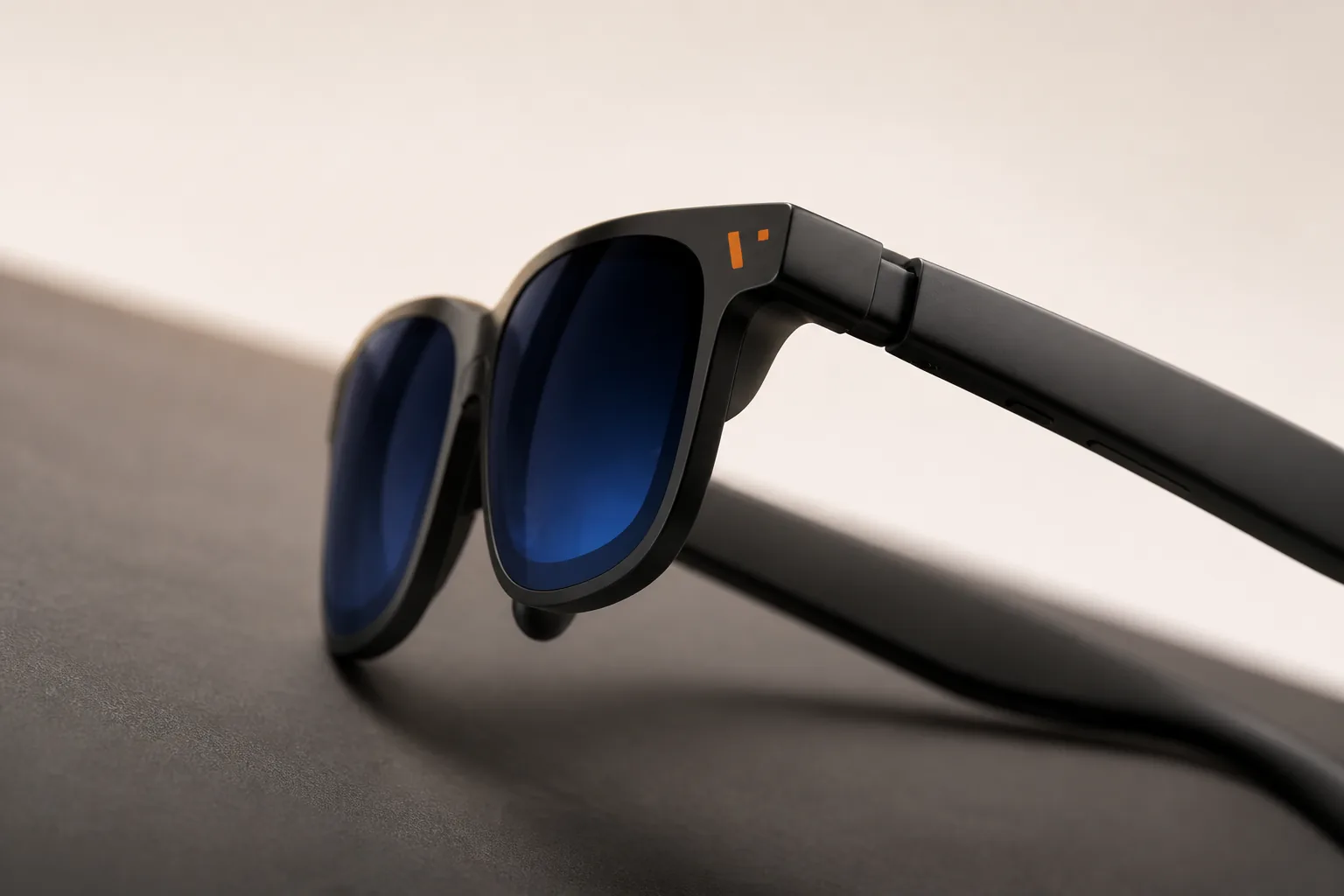
The pick · #1 overall
VITURE Pro 2 — our #1 pick under $300. The 2026 budget king: 63 g, diopter dials, 120 Hz — and it takes 2026's $549 spec flagships to beat it by a visible margin rather than a doubling of price.
Retailer links may earn us a commission — price approx., check retailer.
01The ranked picks under $300
The pick · #1 overall
Re-verified Aug 2026VITURE Pro 2 — $299 approx.
The 2026 budget king: 63 g, diopter dials, 120 Hz — until something under $300 beats it on comfort or clarity, the ranking stands.
VITURE Pro 2
DisplayThe 2026 budget king: 63 g, diopter dials, 120 Hz — $299.
$299approx.
Launched Aug 2026 (5th-anniversary line)
Best for
Key specs
- Weight: 63 g
- Display: 1920 × 1080, 50° FOV
- Diopter dials: 0 to −5.00 D (myopia; no astigmatism correction)
Pairs well with
- → 10Gbps rated USB-C cable — the included one is short; $12–18
- → Powered DP hub — for Switch 2 / handhelds; $60–100
- → Hard-shell case — the panels don't forgive pockets; $15–25
Accessory links may earn us a commission — same price either way. Prices approx.
Retailer links may earn us a commission — see our affiliate disclosure. Price approx., check retailer for current.
RayNeo Air 4 Pro
DisplayThe value play for 2026: HDR10 panels, 1200 nits, Bang & Olufsen-tuned audio.
$299approx.
Street $299–399 depending on promos
Best for
Key specs
- Weight: 76 g
- Display: 1920 × 1080, ≈46–48° FOV
Pairs well with
- → 10Gbps rated USB-C cable — the included one is short; $12–18
- → Powered DP hub — for Switch 2 / handhelds; $60–100
- → Hard-shell case — the panels don't forgive pockets; $15–25
Accessory links may earn us a commission — same price either way. Prices approx.
Retailer links may earn us a commission — see our affiliate disclosure. Price approx., check retailer for current.
RayNeo Air 2s
DisplayThe cheapest credible entry into display glasses.
$159approx.
Regularly $159 on sale (list $299)
Best for
Key specs
- Weight: 76 g (approx.)
- Display: 1920 × 1080, ≈46° FOV
Pairs well with
- → 10Gbps rated USB-C cable — the included one is short; $12–18
- → Powered DP hub — for Switch 2 / handhelds; $60–100
- → Hard-shell case — the panels don't forgive pockets; $15–25
Accessory links may earn us a commission — same price either way. Prices approx.
Retailer links may earn us a commission — see our affiliate disclosure. Price approx., check retailer for current.
The first two are covered in depth in their head-to-head; the short version: Pro 2 if you're nearsighted (dials save you the insert order entirely) or comfort-first (63 g); Air 4 Pro if picture and audio lead (HDR10 contrast shows in dark scenes). At street pricing they're the same money, which is why the vision question decides. REVIEWS
The AI-glasses side of budget: Gen 2 proper starts at $409 — but Meta's own store runs the older/self-branded line from ~$224, and Solos' AirGo V (~$299) brings the removable-camera hedge to the same number. Below that, camera-glasses quality falls off fast — the $99 Amazon listings are audio glasses with camera-shaped optimism.
02What to skip under $200 (and why)
The junk tier is identifiable from its listing language: “AR glasses” with no brand you can Google, resolution stated as “HD” rather than a number, weight unlisted, and prices in the $80–150 band. What's inside: LCD-class panels (gray blacks, poor contrast — the opposite of what makes display glasses magical), unbranded birdbath optics with soft edges, no spatial features, and warranty support that evaporates. The category's single worst purchase pattern is buying these to “test the idea,” disliking them, and concluding smart glasses are a gimmick — when the tested product was the gimmick. OUR ANALYSIS
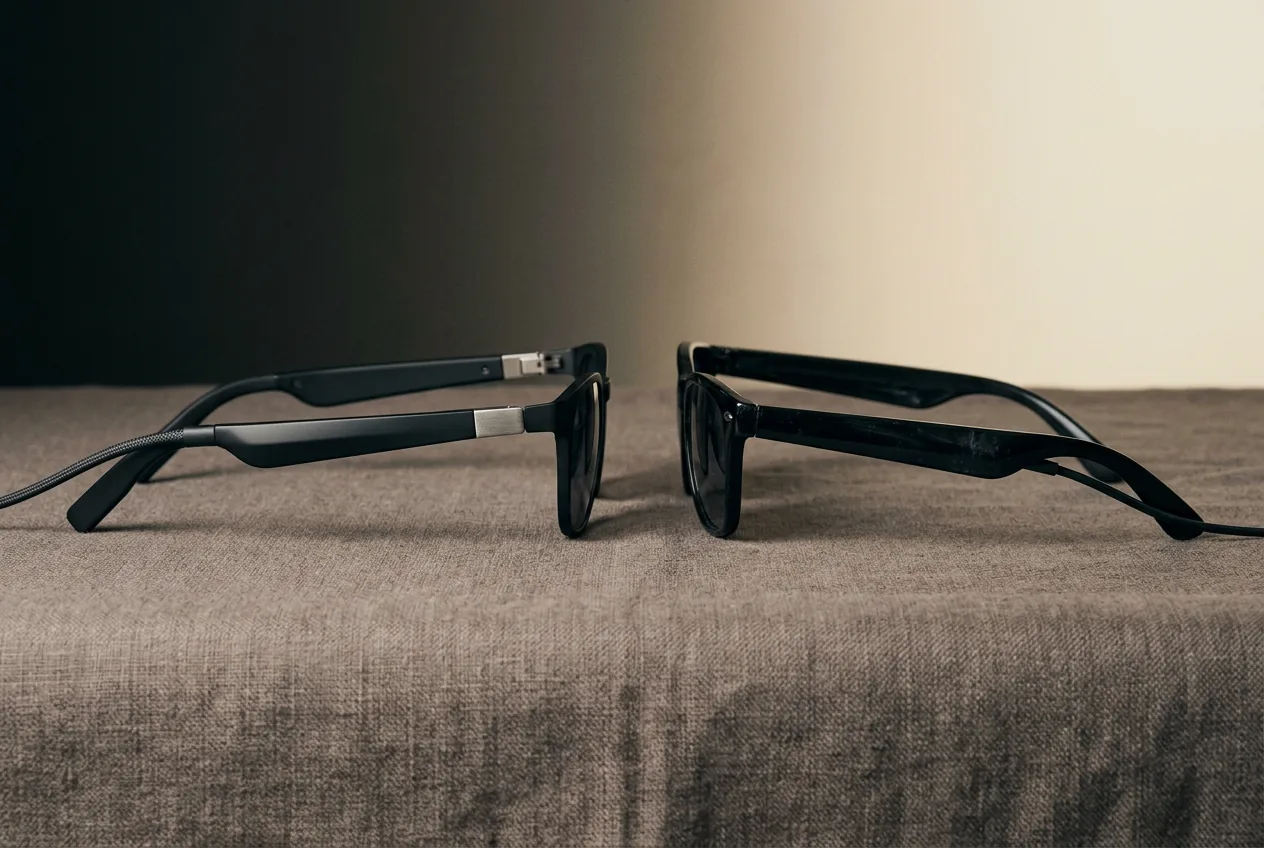
Our pick
VITURE Pro 2
$299approx.
The 2026 budget king: 63 g, diopter dials, 120 Hz — $299.
Check price on AmazonRetailer links may earn us a commission — price approx., check retailer.
03The real trade-offs at $299 (vs the $549–599 tier)
- FOV: 46–50° instead of 57–58° — big TV instead of private cinema. The most noticeable gap in daily use.
- Weight & polish: actually fine — the Pro 2 (63 g) is lighter than the flagships. Budget no longer means uncomfortable.
- Spatial behavior: software-based 3DoF instead of XREAL's on-glasses X1 — works, with more setup friction and brand dependence.
- Brightness: 1200–1600 claimed nits is usable outdoors; flagship-tier HDR punch and calibration still costs more.
- Resolution: 1080p at the tier — with 1200p (1S, Beast) staying upmarket. Text workers notice; movie watchers mostly don't.
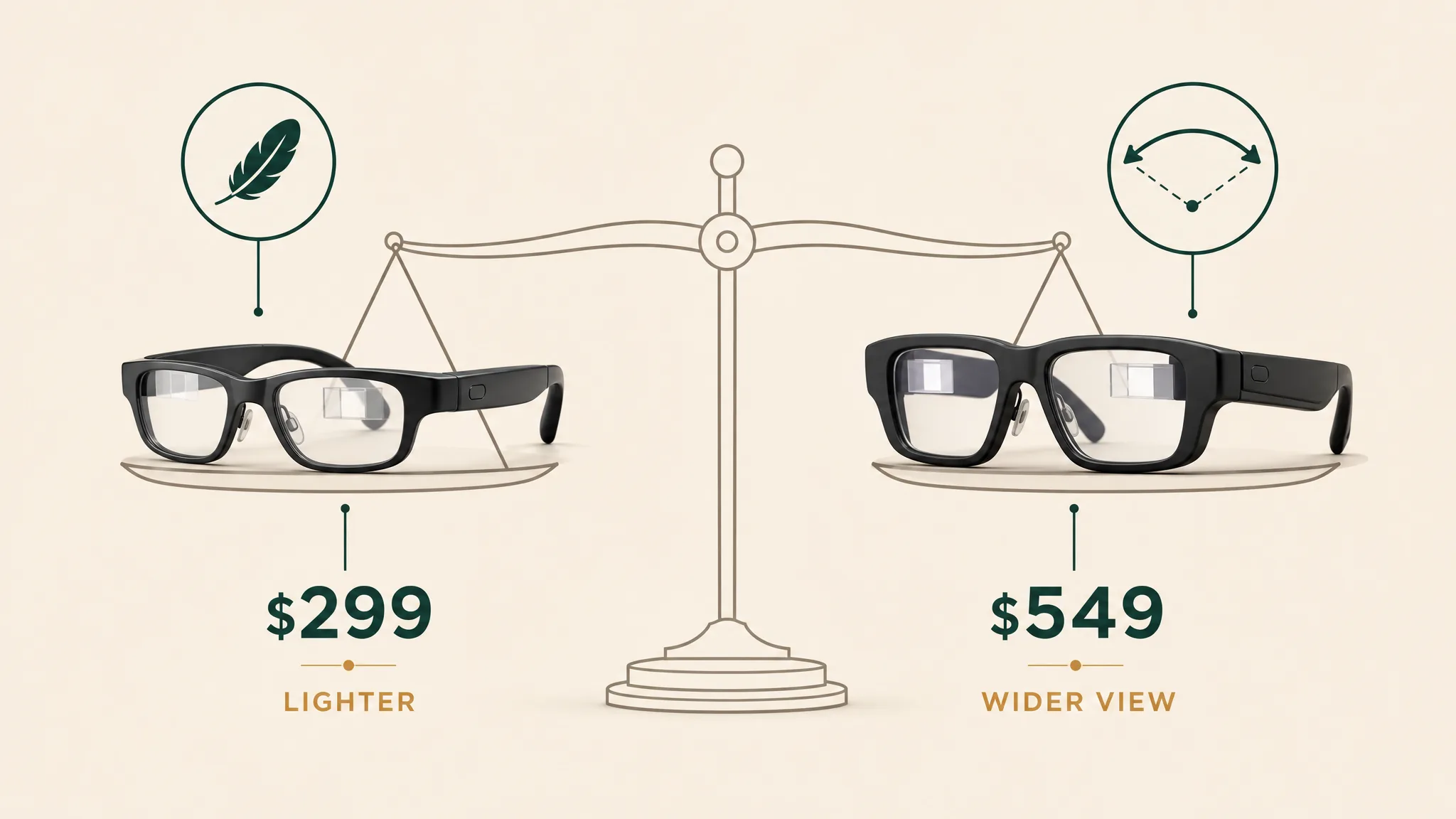
Net assessment: budget buyers give up immersion width and spatial elegance, and keep comfort, brightness, and 90% of the picture. That's the best trade profile the tier has ever offered — which is why our full rankings put two sub-$300 pairs in the top five.
Our pick
VITURE Pro 2
$299approx.
The 2026 budget king: 63 g, diopter dials, 120 Hz — $299.
Check price on AmazonRetailer links may earn us a commission — price approx., check retailer.
04Below $200: the one exception
Name-brand previous-generation glasses on sale. The RayNeo Air 2s at its $159–189 promotional price is the standout — older optics, no HDR, app-story of its era, but a real 1080p/120 Hz product from a real company with real support. XREAL's legacy Air 2 Pro sometimes dips near the line and carries the best insert ecosystem of any discounted pair. The discipline is generational, not numerical: last year's real product beats this year's counterfeit, every time. MFR SPEC
Decoded verdict
The budget buyer's one-line plan
$299: VITURE Pro 2 (nearsighted/comfort) or RayNeo Air 4 Pro (picture/audio) — either is a genuinely excellent purchase, not a compromise. Under $200: name-brand sale units only (Air 2s class), and never the unbranded listings. Under $100: save longer — or reconsider audio glasses, the one honest sub-$100 smart-glasses category.
Frequently asked questions
What are the best smart glasses under $300?
Are cheap smart glasses worth it?
What's the cheapest good entry into smart glasses?
Our pick #2
RayNeo Air 4 Pro
$299approx.
The value play for 2026: HDR10 panels, 1200 nits, Bang & Olufsen-tuned audio.
Check price on AmazonRetailer links may earn us a commission — price approx., check retailer.