The best AI glasses of 2026, ranked
AI glasses are the category that actually sells in the millions — assistants, cameras, and (increasingly) small displays in wearable form. Here are the picks worth your money, including the camera-free options most lists ignore.
On this page
AI glasses are where the smart-glasses market stopped being a hobbyist niche and became a consumer category — millions of Ray-Ban Meta units, a fall 2026 Google-led platform wave incoming, and the first genuinely useful assistant experiences on a face. This guide ranks the current picks, including the camera-free alternatives that Reddit keeps asking for and most lists keep forgetting.
The pick · #1 overall
Ray-Ban Meta Gen 2 — our #1 pick for most people. The best camera, assistant, and battery in a normal-looking frame. The finished article everyone else is shooting at.
Retailer links may earn us a commission — price approx., check retailer.
01The ranked picks
The pick · #1 overall
Re-verified Aug 2026Ray-Ban Meta (Gen 2) — $409 approx.
The best camera, assistant, and battery in a normal-looking frame — the mature default the challengers are all chasing.
Ray-Ban Meta (Gen 2)
AI CameraThe default AI camera glasses: better battery, 3K video, huge style range.
$409approx.
Wayfarer $409 (Sep 2026); premium lenses/styles to $459+ — check current price
Best for
Key specs
- Weight: 49 g (approx., varies by style)
- Camera: 12 MP ultra-wide, 3K Ultra HD video
Pairs well with
- → Hard-shell case — the panels don't forgive pockets; $15–25
Accessory links may earn us a commission — same price either way. Prices approx.
Retailer links may earn us a commission — see our affiliate disclosure. Price approx., check retailer for current.
Meta Ray-Ban Display
AI+DisplayA real display, a real camera, and a neural wristband — the most complete single device.
$799approx.
Includes neural band; Transitions lenses standard
Best for
Key specs
- Weight: 50 g (approx. glasses only)
- Display: 600 × 600 (shared display), 20° diagonal (≈14° horizontal) FOV
- Camera: 12 MP ultra-wide (3024×4032 photo; 1440×1920 @30 fps video), 3× zoom
Pairs well with
- → 10Gbps rated USB-C cable — the included one is short; $12–18
- → Powered DP hub — for Switch 2 / handhelds; $60–100
- → Hard-shell case — the panels don't forgive pockets; $15–25
Accessory links may earn us a commission — same price either way. Prices approx.
Retailer links may earn us a commission — see our affiliate disclosure. Price approx., check retailer for current.
Rokid Glasses
AI+Display49 g standalone AR: full-color waveguides, camera, and assistant — no phone tether.
$699approx.
Rokid store sale $699 (Sep 2026); list $799 — check current price
Best for
Key specs
- Weight: 49 g
- Display: 480 × 400 (monochrome green), 30° FOV
- Camera: 12 MP built-in camera
Pairs well with
- → 10Gbps rated USB-C cable — the included one is short; $12–18
- → Powered DP hub — for Switch 2 / handhelds; $60–100
- → Hard-shell case — the panels don't forgive pockets; $15–25
Accessory links may earn us a commission — same price either way. Prices approx.
Retailer links may earn us a commission — see our affiliate disclosure. Price approx., check retailer for current.
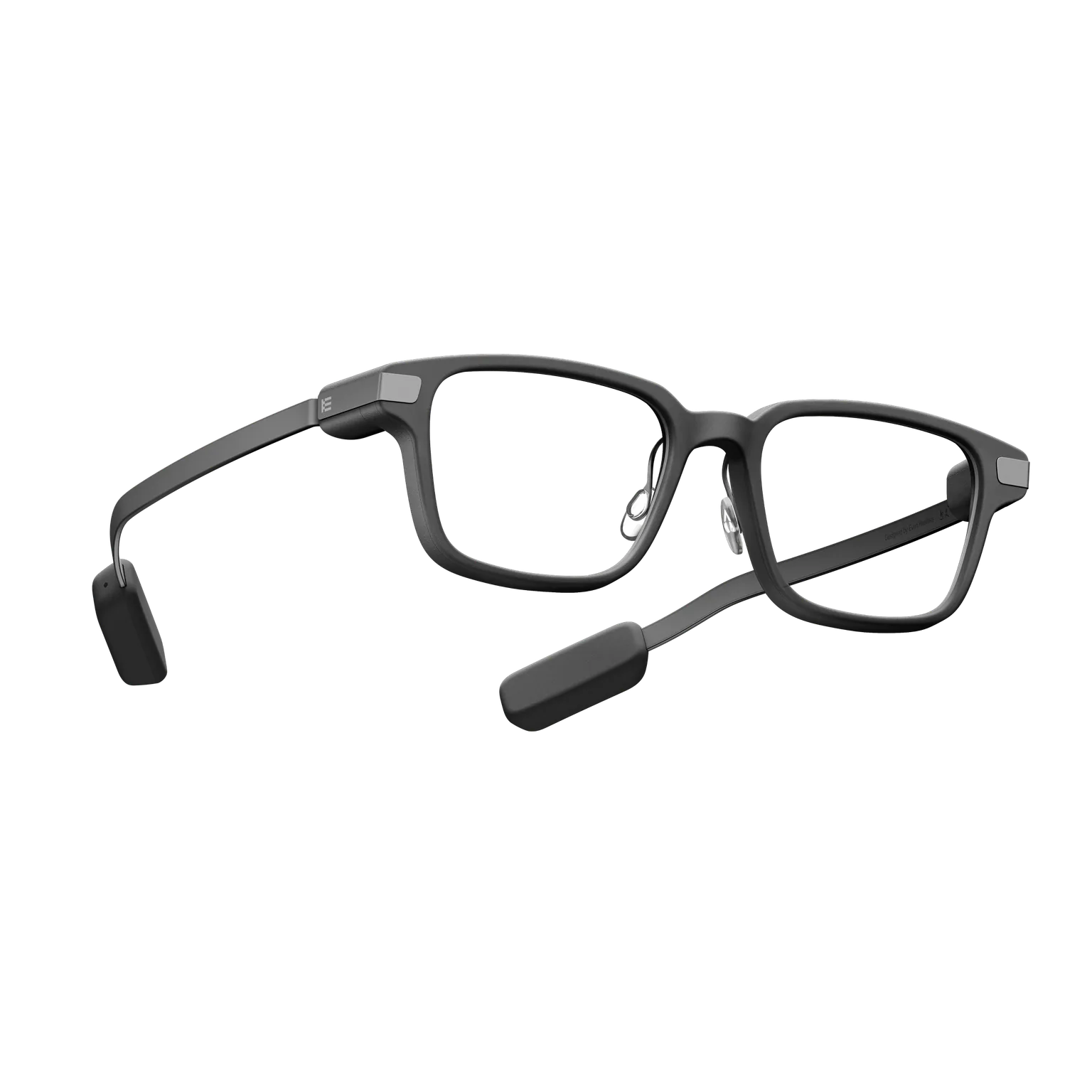
Even Realities G2
HUD36 g of magnesium and titanium with a quiet green HUD — glasses first, gadget second.
$599approx.
Rx lenses from $159 through Even
Best for
Key specs
- Weight: 36 g
- Display: text-class (≈720p visual), glance-sized FOV
Pairs well with
- → Hard-shell case — the panels don't forgive pockets; $15–25
Accessory links may earn us a commission — same price either way. Prices approx.
Retailer links may earn us a commission — see our affiliate disclosure. Price approx., check retailer for current.
Memomind One
HUDCamera-free AI glasses with a dual-eye display and real-time translation — $399.
$399approx.
Launched Jun 2026
Best for
Key specs
- Weight: 45 g (approx.)
- Display: text-class, glance-sized FOV
Pairs well with
- → Hard-shell case — the panels don't forgive pockets; $15–25
Accessory links may earn us a commission — same price either way. Prices approx.
Retailer links may earn us a commission — see our affiliate disclosure. Price approx., check retailer for current.
The reasoning, compressed: the Gen 2 wins on maturity — battery that finally lasts a day (8 h typical, ~40 h with the case), the best camera (12 MP ultra-wide, 3K video), the most polished assistant, and frames people compliment instead of tolerate. REVIEWS The Ray-Ban Display is the one-device future that works today — for the buyer who accepts a 20° canvas. Rokid's Glasses are the lightest full-function standalone pair at 49 g, with software that reviewers call promising-but-uneven. The two camera-free picks serve the buyer whose priority is wearing a computer without wearing a controversy.
Situational picks worth knowing: Oakley Meta Vanguard ($499) for sport capture — the extra-wide 12 MP viewfinder and weather resistance are genuinely sport-first; Solos AirGo V (~$299) for the removable-camera hedge; RayNeo X3 Pro ($1,099+) for outdoor-brightness standalone AR at enthusiast pricing.
02The camera-free question, answered properly
“Are there smart glasses without a camera?” is one of the highest-signal queries in this market — it's buyers telling the industry what it underserves. The honest landscape: Even G2 is the reference product (36 g, magnesium-titanium, IP65, monochrome HUD, prescription −12/+12 D — full detail in our wearing-glasses-underneath guide— no camera, no subscription); Memomind One undercuts it at $399 with dual-eye display and translation — the full camera-free translation rundown lives in our translation guide — (Engadget scored it 7.4/10, praising comfort and battery, side-eyeing the AI-memory features); Halliday G2 arrives from pre-order with free prescription lenses. What camera-free buys you: entry to gyms, offices, and dinner tables that ban camera glasses, plus a conscience that doesn't need a policy page. What it costs: photos. That's the entire trade. REVIEWS

Our pick
Ray-Ban Meta (Gen 2)
$409approx.
The default AI camera glasses: better battery, 3K video, huge style range.
Check price on AmazonRetailer links may earn us a commission — price approx., check retailer.
03Subscriptions, honestly
The market's quietest shift: AI features moved from “free with the glasses” toward tiered services — Meta's AI+ subscription being the mainstream example, bundling advanced assistant capabilities that the base (still fully functional) experience omits. The practical buyer's stance: core functions don't require subscriptions on any current mainstream product, the paid tiers buy genuinely advanced AI behavior, and camera-free brands (Even) position no-subscription as a feature. If “smart glasses without subscription” is your search, your shortlist is: every display-glasses pair (they're monitors, nothing to subscribe to), Even G2, and the core Ray-Ban Meta experience. MFR SPEC
Our pick
Ray-Ban Meta (Gen 2)
$409approx.
The default AI camera glasses: better battery, 3K video, huge style range.
Check price on AmazonRetailer links may earn us a commission — price approx., check retailer.
04The waiting game: what fall 2026 changes
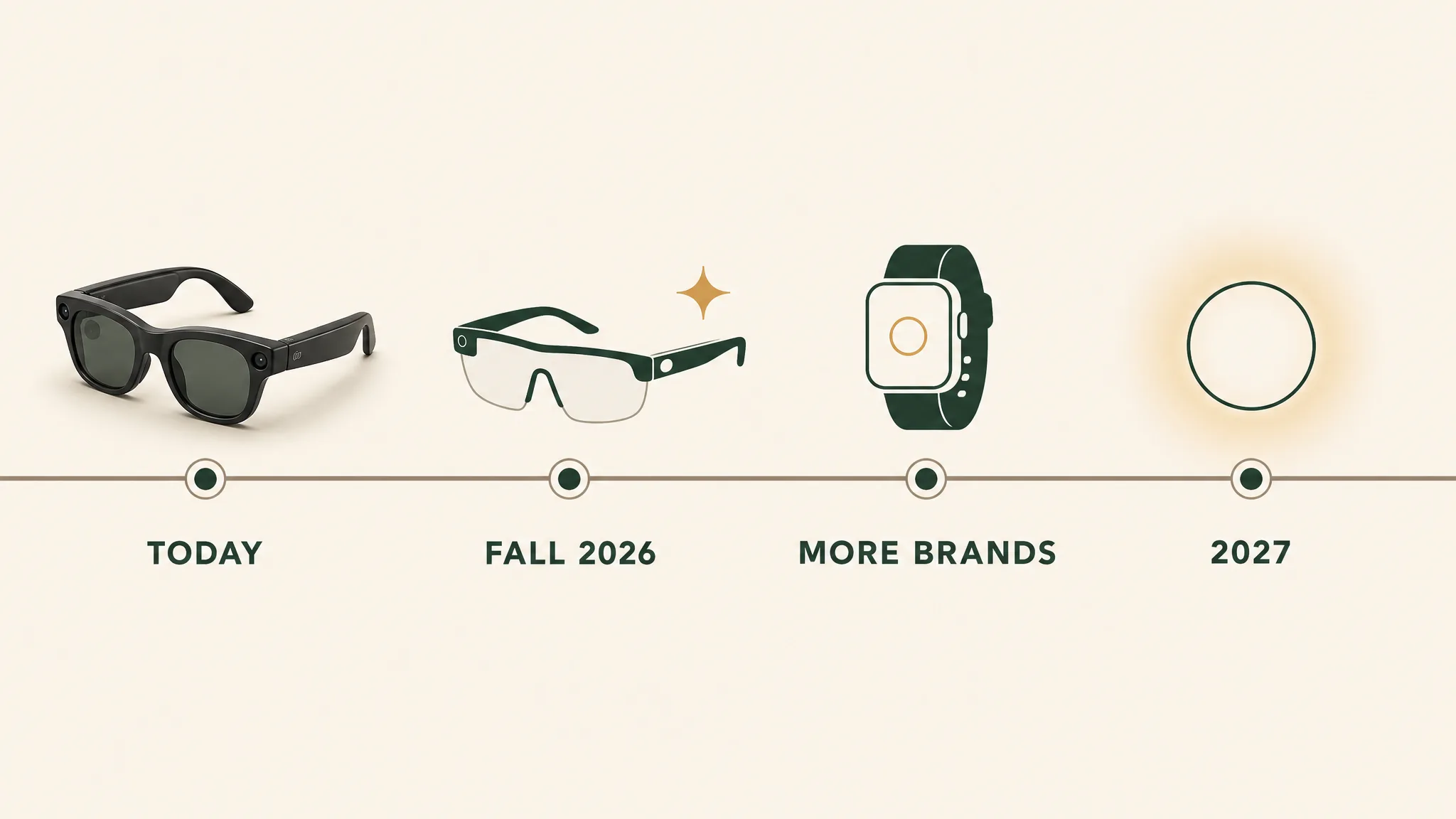
Google's Android XR eyewear — Gentle Monster and Warby Parker frames, Gemini-first, promised iPhone pairing — lands this fall, with Samsung tracking two glasses models of its own and XREAL's Project Aura carrying the display-glasses flag for the platform (if iPhone pairing is your dealbreaker, our iPhone compatibility guide tracks it). Our buying advice stands: platform launches reward the patient and punish the panicked. If your need is now, the ranked picks above are mature products that won't become obsolete overnight (AI glasses are app-platform devices — they get better with software, and Ray-Ban Meta has four years of improvement history to prove it). If your need is “eventually, the sci-fi pair,” wait for the fall reviews and let the early adopters write them. MFR SPEC
Decoded verdict
Buy the Gen 2 unless you can name your exception
The Ray-Ban Meta Gen 2 is the mature, safe, genuinely excellent default — the pair we'd hand a friend. The exceptions name themselves: display + assistant in one device → Ray-Ban Display; standalone AR without Meta → Rokid; no camera, ever → Even G2 (budget: Memomind One); sport → Oakley; waiting for Google → read Android XR, explained and check back in the fall.
Frequently asked questions
What are the best AI glasses in 2026?
Are there AI glasses without a camera?
Do AI glasses require a subscription?
Should I wait for Google's Android XR glasses this fall?
Our pick #2
Meta Ray-Ban Display
$799approx.
A real display, a real camera, and a neural wristband — the most complete single device.
Check price on AmazonRetailer links may earn us a commission — price approx., check retailer.